Ceramic and stone plants consistently report reuse instability not because individual machines underperform, but because the stack was assembled by comparing equipment specifications rather than mapping each module to the plant’s actual governing failure mode. The consequence shows up at commissioning or during the first high-load production run: modules that performed well in isolation begin interfering with each other, removed contaminants re-enter the loop, and operators are left managing symptoms rather than causes. Correcting this after installation means either retrofitting buffer capacity that was never budgeted, or accepting unstable reuse quality that slowly erodes compliance standing and increases freshwater consumption. The judgment that determines whether a wastewater project succeeds is not which equipment category to buy, but which module removes the instability that is currently propagating damage forward through every downstream stage.
What each core wastewater module is supposed to stabilize
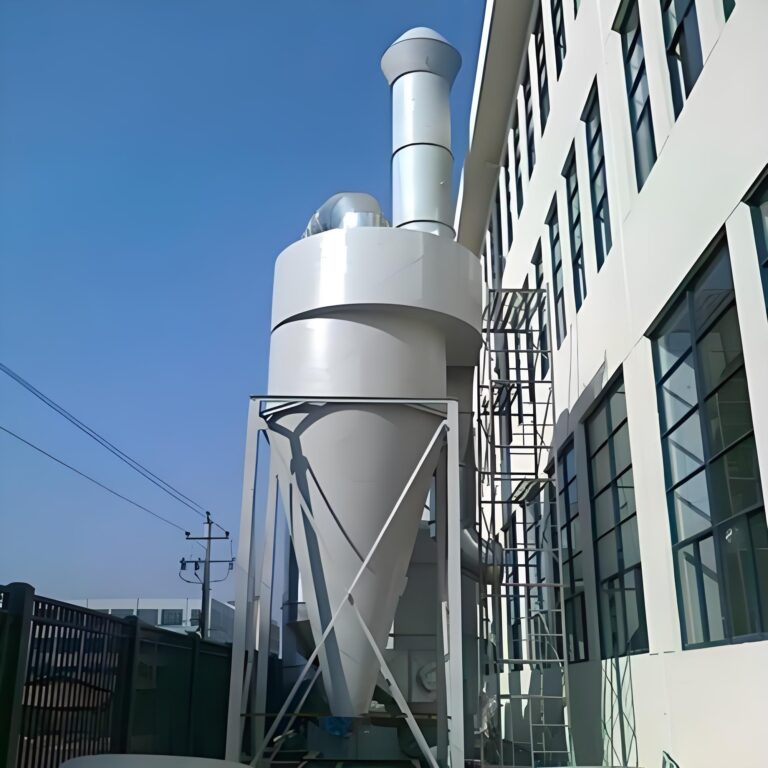
Every core module in a wastewater stack has a defined stabilization function, and the performance thresholds associated with each one only become meaningful when the governing contaminant at your facility matches what that module is designed to remove. Misreading this relationship is the most common reason plants end up with sophisticated equipment that does not improve reuse quality.
Reverse osmosis, operating at up to 99.5% dissolved salt removal under appropriate pretreatment conditions, addresses a very specific problem: situations where ionic load in the recirculated water is the binding constraint on reuse. In ceramic manufacturing, where process water cycles through glazing, cutting, and washing stages, dissolved salt accumulation can eventually affect glaze chemistry and surface finish quality. But RO only delivers its design-level performance when the influent it receives has already been cleared of suspended solids and oil — feeding inadequately pretreated water to an RO membrane accelerates fouling and collapses the removal rate well below the specification threshold. The threshold is real; the conditions that maintain it are separate engineering decisions.
Vacuum evaporation concentrates solids above 85%, which matters primarily in high-load waste streams where volume reduction is the problem — not contamination type. Stone cutting operations generating slurry at high density benefit from this approach because the alternative is transporting and disposing of large volumes of dilute sludge, which creates cost and regulatory exposure. For a plant where the dominant problem is instead intermittent solids peaks from cutting line changeovers, vacuum evaporation solves the wrong problem.
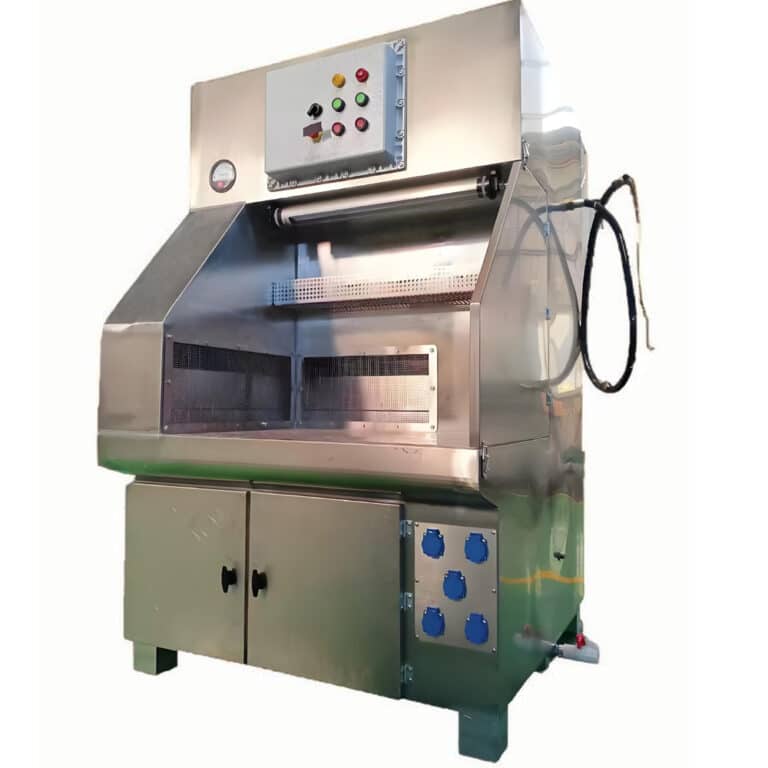
Tramp oil separators remove free and emulsified oil to below 1% in a single pass without consumables, which is decisive when oil carryover is interfering with downstream coagulation or settling. Because oil suppresses coagulant performance, even moderate oil concentrations upstream can destabilize the entire clarification stage — so the separator’s value is not just oil removal but the preservation of every module that follows it.
| Module | Stabilizes | Performance Threshold | When It Matters |
|---|---|---|---|
| Reverse osmosis | Dissolved salts | 99.5% removal | When dissolved salts are the limiting factor for reuse stability |
| Vacuum evaporation | High-concentration solids | >85% solids concentration | When high-load waste threatens loop stability without volume reduction |
| Tramp oil separator | Tramp oils | <1% oil in single pass | When oil is the governing instability and ongoing consumable cost is a concern |
The pattern across all three cases is the same: the threshold is a design-level performance figure, not a universally guaranteed outcome. It holds when the module is correctly sequenced, the influent matches the design basis, and the governing instability at that plant is the one the module addresses.
How ceramic and stone plants should rank equipment by failure mode
Ranking equipment decisions by failure mode rather than by category is a planning discipline, not a standardized sequence. The order that produces stable reuse at one facility may be counterproductive at another if the governing instability is different.
The starting point is identifying which single contaminant or process variable, if left uncontrolled, propagates disturbance forward through the most downstream stages. In a ceramic tile plant running continuous wet-process cutting, coarse particle surges from blade changeovers or raw material variability are the most common primary instability — they overload settling capacity, blind filter elements, and create sludge blanket disruptions that take hours to recover. In a natural stone fabrication facility using water-fed diamond tooling with intermittent lubrication, tramp oil carryover is more likely to be the governing problem, because even small oil concentrations inhibit coagulant efficiency and prevent clear overflow from reaching the reuse tank. These two plants can look identical on a wastewater flow diagram but require a completely different first module.
The failure-mode ranking process works by tracing each contaminant type to its downstream consequence. Coarse solids overload settling equipment and create variable sludge density that makes dewatering inconsistent. pH excursions suppress coagulant activity and can corrode equipment internals over time. Oil carryover suppresses floc formation. Each of these has a different propagation pathway, and the one with the longest damage chain relative to your process is the one to address first — not the most technically sophisticated option, and not the one your equipment vendor most recently discussed.
A useful review check here is to map the last three operational upsets or reuse quality failures back to their origin point in the treatment sequence. If they trace consistently to the same module or transfer point, that module is almost certainly the governing instability, regardless of what the equipment specification claims its performance should be. Procurement decisions made without this mapping tend to add capacity in the wrong place while leaving the actual source of instability untouched.
Where adding equipment creates complexity without solving instability
There is a procurement pattern common enough to be worth naming directly: a plant experiences reuse instability, a broader equipment list is assembled to address the perceived risk, and the resulting stack creates more failure surfaces without resolving the original problem. The instability continues; the system just becomes harder to operate.
Each additional module introduced into a treatment sequence adds at least one new transfer point, one additional control parameter, and one new failure mode. A well-specified magnetic separator added upstream of a settling tower is beneficial when ferrous particles are present. Added when they are not, it introduces a maintenance burden, a potential choke point during peak flow, and one more variable for operators to monitor — none of which address whatever is actually destabilizing the reuse loop. The complexity is real even when each individual module performs to specification.
The hidden trade-off here is that a broader equipment list tends to feel safer during procurement and is easier to justify in an audit against a narrow, purpose-selected stack. A longer list reads as thoroughness. But a narrower set of correctly sequenced modules — each addressing a confirmed instability — typically produces more reliable reuse quality and simpler day-to-day operator control, because fewer handoff points mean fewer opportunities for one uncontrolled stage to push contamination downstream. ISO 20400:2017 frames procurement discipline in terms of matching procurement decisions to verified needs rather than perceived coverage; the same logic applies to equipment selection when the instability has not been characterized first.
The boundary condition that determines when added equipment helps versus complicates is whether the governing instability has been confirmed before the module was specified. If a coagulation dosing system is added to a line where oil suppression is the real problem, the dosing system will consistently underperform its specification — not because the equipment is wrong, but because the chemical demand is being distorted by an upstream condition the system was never designed to address. The downstream consequence is typically chronic dosing inefficiency, sludge that varies in density and dewaterability, and eventual operator frustration that gets attributed to the wrong piece of equipment.
Why buffers and sludge exits matter as much as the main machines
The equipment that plant managers evaluate least carefully during procurement — pH adjustment systems, equalization tanks, sludge dewatering units — is often what determines whether the main treatment equipment can maintain stable performance across production shifts.
pH neutralization is the clearest example. Ceramic manufacturing wastewater can shift significantly in pH depending on which glaze chemistry is running, how concentrated the rinse water is, and whether acid-based cleaning cycles are overlapping with production wastewater. When influent pH spikes or drops before the coagulation stage, coagulant efficiency collapses across the full operating range of the chemical — not just at the excursion point. Plants that treat pH neutralization as optional or size it too small for actual peak variability will find that their coagulation and settling equipment never delivers the clarity the specification promised, even after repeated dosing adjustments. The pH buffer is not a secondary piece of equipment; it is a prerequisite for every module downstream of it.
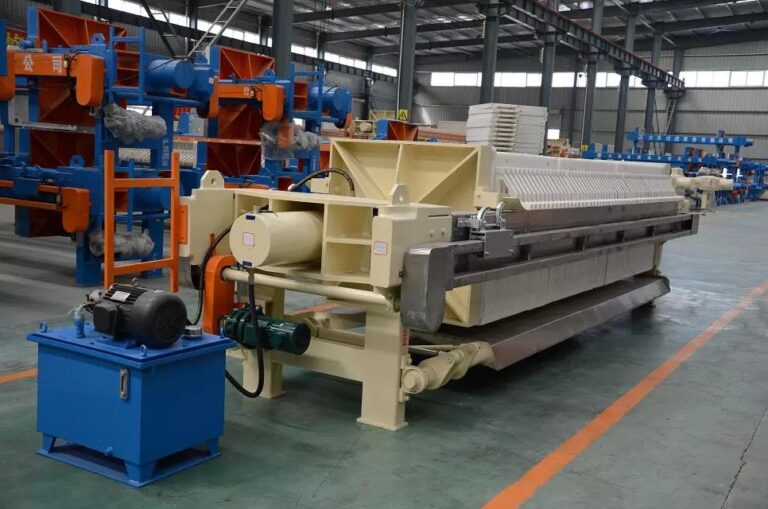
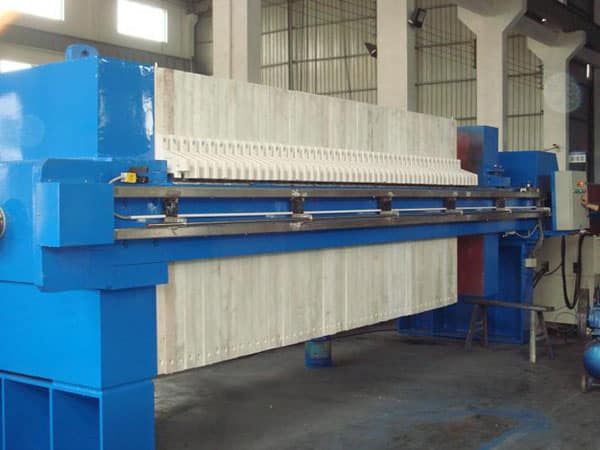
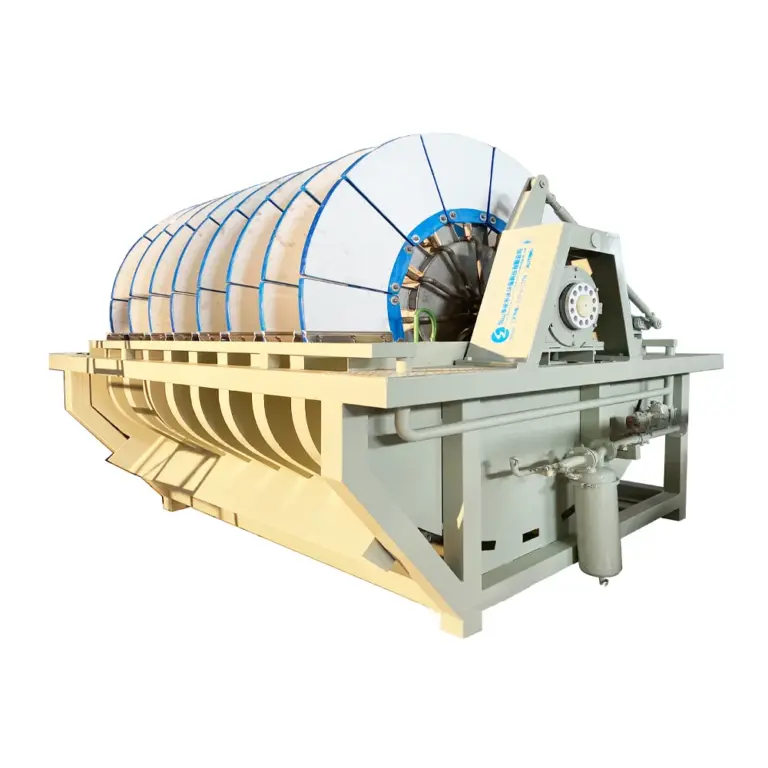
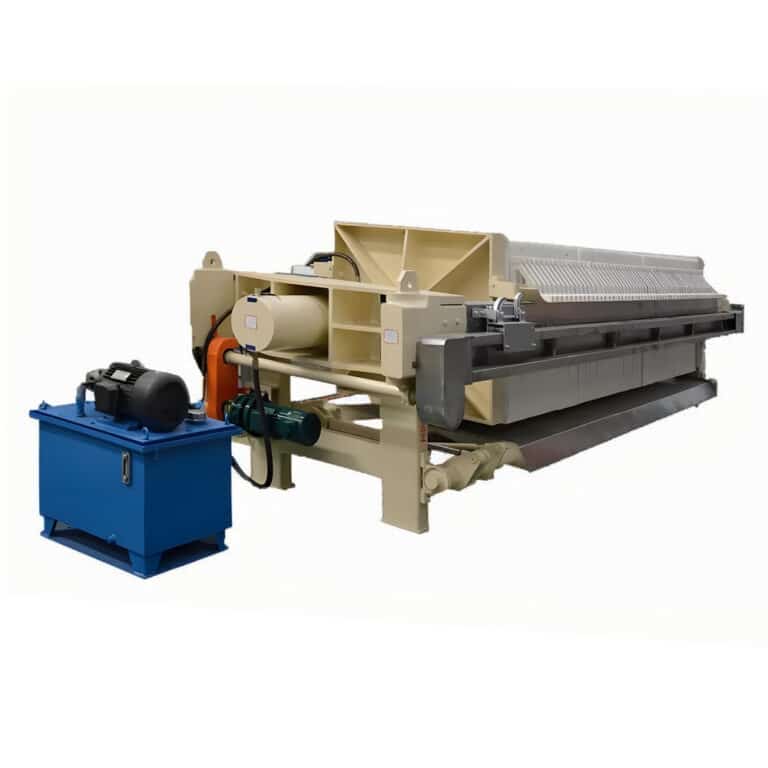
Sludge exits present the same problem from the other direction. Sludge that is not continuously and reliably removed from the clarification stage does not stay inert — it accumulates, compresses unevenly, creates rising currents in sedimentation tanks, and returns suspended solids to the treated water that then require re-treatment. Batch sludge removal systems create predictable accumulation cycles that are visible in treated water turbidity even if the operator is following the removal schedule. Continuous dewatering and discharge, including vacuum filter arrangements that maintain constant sludge drawdown, remove this accumulation dynamic from the system entirely. The consequence of undersizing this element is that every clarification metric the plant tracks — turbidity, suspended solids, reuse conductivity — will show cyclical degradation that is difficult to attribute to a specific cause during troubleshooting.
| Component | Functie | Instability Prevented |
|---|---|---|
| pH neutralization system | Buffers influent pH | Prevents pH shock that can destabilize downstream module performance |
| Sludge dewatering equipment | Reduces free water in sludge | Prevents contaminants from re-entering the water loop |
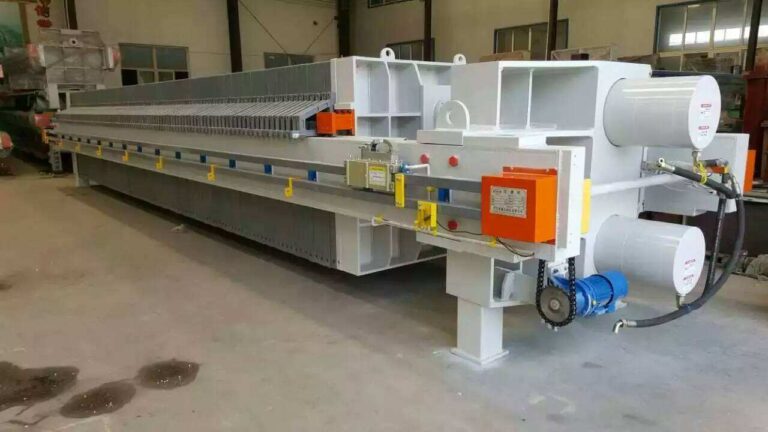
| Vacuümfilters | Provides continuous sludge discharge | Avoids batch accumulation and solids reintroduction that upsets treatment stability |
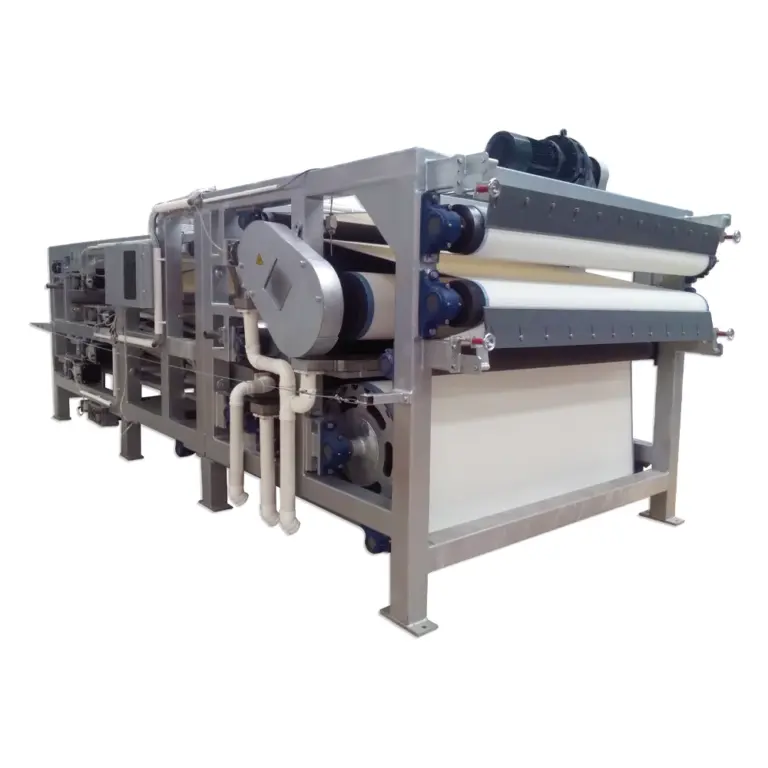
When these components are absent or undersized, the downstream consequence is not just reduced treatment performance. It is that the instability generated at these points is absorbed and amplified by every subsequent module, making the whole system harder to control and the root cause harder to identify. Sizing and selecting the Riemfilterpers for continuous rather than batch throughput, and confirming that pH control is designed for actual influent variability rather than average conditions, resolves more reuse instability than adding a more sophisticated main treatment module to an already adequate clarification stage.
How to build an equipment stack for reuse rather than just discharge
The difference between a stack designed for discharge compliance and one designed for reuse stability is not just the treatment standard targeted — it is the sequencing logic and the tolerance for contaminant re-entry at each transfer point.
Discharge-oriented stacks are typically designed to meet a treated effluent standard at the final outlet. Reuse-oriented stacks must maintain water quality consistency across multiple cycles, which means that any contaminant that survives one pass through the system and re-enters the production loop will be concentrated over successive cycles. A single poorly managed transfer point — a pump pit with insufficient residence time, a filter that is bypassed during maintenance, a dewatering unit that returns its filtrate to the wrong point in the sequence — can erode reuse quality gradually enough that operators do not identify the source for weeks.
Ultrafiltration used as a first-stage volume reduction step, where it can reduce oily water volumes by up to 98% under appropriate operating conditions, lowers the load on every downstream module and allows the remaining equipment to be sized for polishing rather than bulk removal. This matters for capital cost and for long-term operating stability — a system running below its design load tolerates variability better than one operating at or above it. When RO polishing is required for dissolved salt control, confirming that it receives pre-treated water is not a sequencing preference; it is a membrane protection requirement, because fouling that accumulates when RO receives inadequately conditioned influent degrades removal performance in a way that is recoverable only through cleaning cycles that create downtime and chemical consumption.
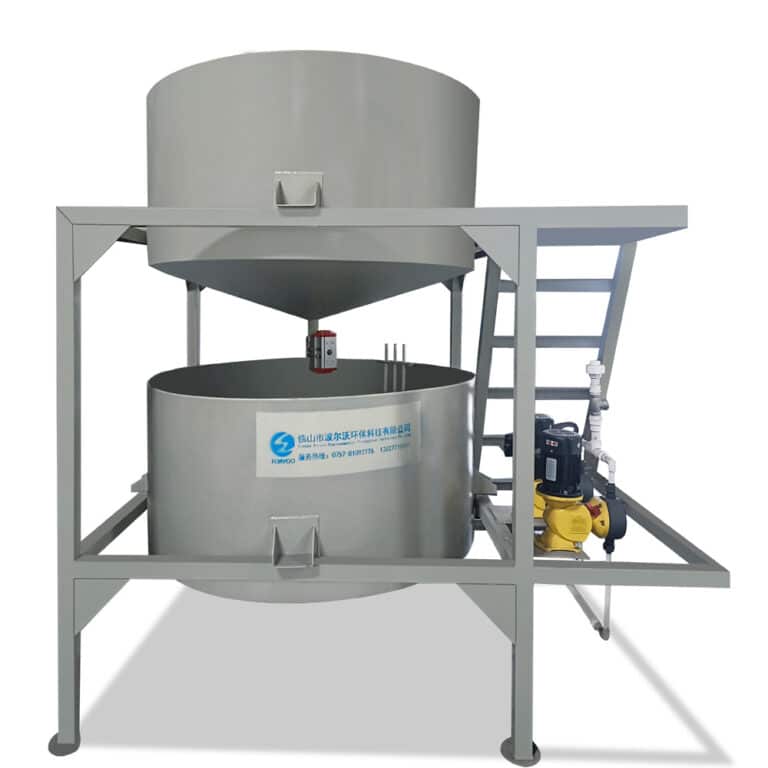
Integrating chemical pretreatment — including the PAM/PAC intelligent systeem voor chemische dosering for adaptive coagulant and flocculant delivery — with sludge dewatering as a closed loop rather than two independent processes is how the re-entry problem is closed. If the dewatering filtrate returns to a point upstream of the chemical dosing stage, the chemical load fluctuates with each dewatering cycle. If it returns to an equalization point, the variability is absorbed before it reaches the dosing control system. That transfer point decision, which rarely appears in equipment specifications, often determines whether the integrated stack behaves as a system or as a collection of individually specified machines.
| Stack Principle | Wat bevestigen? | Waarom het belangrijk is |
|---|---|---|
| RO after UF or chemical treatment | Confirm reverse osmosis receives pre-treated water | Ensures final polishing of dissolved salts for high-purity reuse |
| UF as first-stage volume reduction | Confirm oily water volume is reduced by up to 98% before downstream stages | Lowers load on subsequent modules and reduces overall equipment size |
| Integrate chemical pretreatment with sludge dewatering | Confirm pretreatment and dewatering form a closed loop with no transfer gaps | Prevents contaminants from being reintroduced and destabilizing the system |
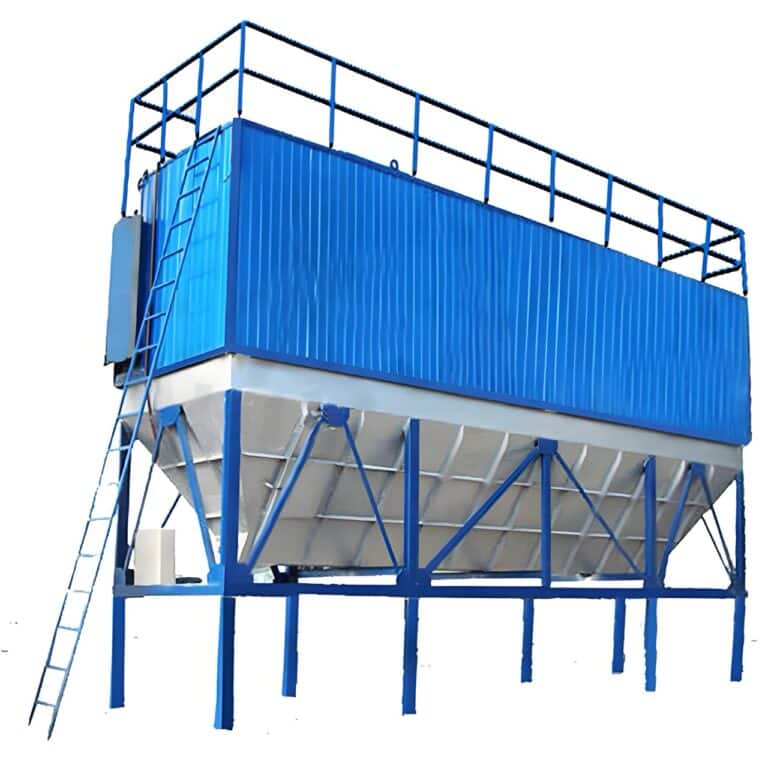
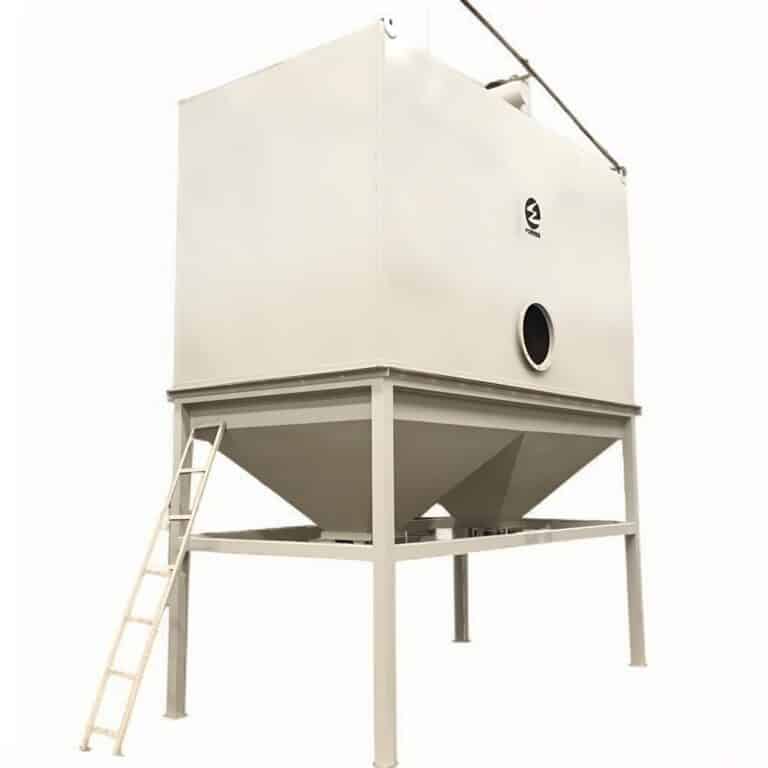
For an in-depth treatment of how vertical sedimentation stages fit into a reuse-oriented configuration, the Complete Vertical Sedimentation Tower Guide addresses design, performance, and implementation standards in detail.
Which module package fits your plant’s weakest point
Module selection that starts from the plant’s weakest point rather than from a module category list produces a narrower, cheaper, and more controllable stack. The challenge is that the weakest point requires honest characterization — not an assumption carried forward from a similar facility or a vendor’s default configuration.
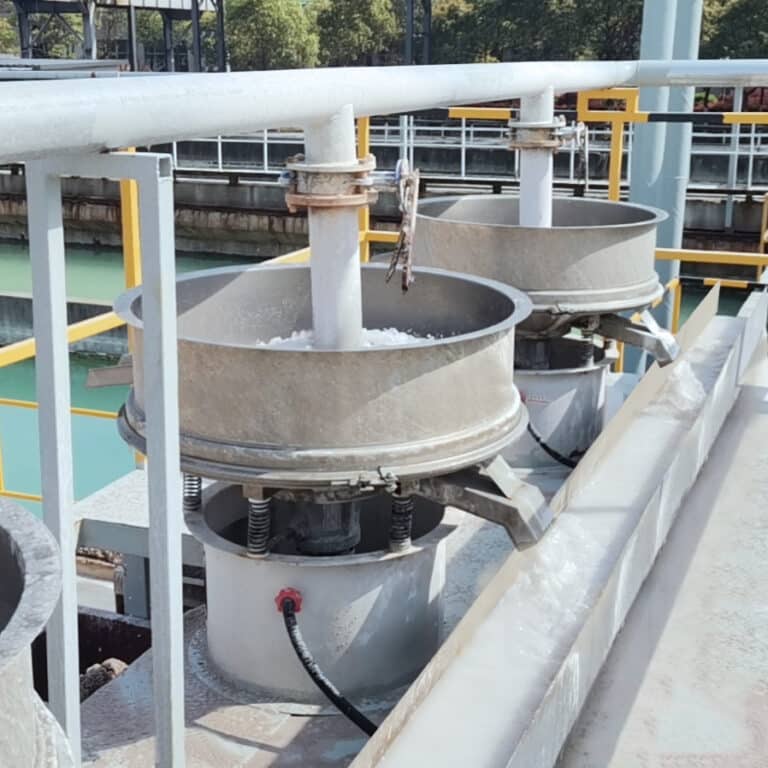
When coarse solids peaks are the governing instability, the correct first response is often simpler than the equipment catalogue suggests. Paper bed filters, operating on gravity filtration without chemical dependency, remove the primary contaminant directly and without introducing additional control variables. Adding a more sophisticated module ahead of this problem does not make the solution more robust; it makes it more complex while the coarse solids continue to pass through and damage downstream equipment. The instability in this case is mechanical, and a mechanical solution is appropriate.
When free or emulsified oil is the governing instability, tramp oil separators address the problem at the point where oil carryover begins suppressing coagulant performance. The indicative six-month payback figure associated with this equipment is useful as a prioritization signal rather than a guaranteed commercial outcome — it reflects the combined value of reduced coagulant consumption, improved settled water quality, and extended dewatering equipment life that results from removing the oil before it enters the treatment loop. The payback case holds when oil has been confirmed as the governing instability; it does not hold when oil is a secondary variable that is being treated as primary.
When the governing instability has not been confidently identified — which is more common than most procurement processes acknowledge — pilot testing on actual wastewater from the specific facility is the correct selection method. Pilot testing replaces assumption with measurement and allows the module package to be selected against real contaminant loading, flow variability, and pH range rather than against a facility description that may not capture seasonal or shift-to-shift variation. It also creates a defensible basis for the selected configuration if the system’s performance is later questioned during an operational audit.
| Governing Instability | Suggested Module Approach | Key Evidence or Criterion |
|---|---|---|
| Coarse solids peaks | Paper bed filters | Simple gravity filtration that directly removes the primary source of instability without adding complexity |
| Tramp oil (free or emulsified) | Tramp oil separators | Reduces oil to <1% in a single pass; payback in 6 months or less when oil is the governing instability |
| Unknown or unverified instability | Pilot testing on actual wastewater | Identifies the plant’s governing source of instability and selects the correct module package, reducing guesswork |
The procurement check that most plants skip is confirming which instability is governing before specifying the full equipment scope. A facility that can answer that question with measurement data rather than inference will almost always end up with a narrower, more effective stack than one that specified equipment against a generalized ceramic or stone plant profile.
The selection logic that produces stable reuse in ceramic and stone plants runs from weakest point to module choice — not from module category to plant application. Before committing to a full equipment scope, the decision that most reliably improves outcomes is to confirm which single source of instability is propagating damage furthest downstream, then verify that the first module in the stack addresses that instability specifically, and that the buffers and sludge exits surrounding it are sized for actual operating variability rather than average conditions.
What to confirm before procurement: whether the governing instability has been identified by measurement or assumed from a plant profile; whether the proposed sequencing accounts for transfer point contamination risk and filtrate return points; and whether the sludge exit capacity is designed for continuous removal or will introduce batch accumulation cycles that the rest of the stack will need to absorb. These are the decisions that determine whether the equipment performs as a system rather than as a collection of individually specified machines.
Veelgestelde vragen
Q: Our plant runs multiple product lines with different glazes and slurry chemistries — does the failure-mode ranking approach still work when the governing instability shifts between shifts or seasons?
A: Yes, but the ranking process needs to account for the range of governing instabilities rather than a single one. Map each product line or shift condition to its dominant contaminant type, then identify which instability causes the longest downstream damage chain across the full operating schedule. If coarse solids dominate day shifts and pH excursions dominate cleaning cycles, the equipment stack must address both — but the sequencing priority should still go to whichever one propagates disruption further into the treatment loop. Assuming a single governing instability when the process is variable is a common reason a correctly selected module underperforms after commissioning.
Q: Once the governing instability is confirmed through pilot testing, what is the immediate next step before finalizing the equipment scope?
A: Confirm the transfer point and filtrate return logic before specifying module quantities or sizes. Knowing which contaminant governs the instability tells you what the first module should be, but it does not tell you where dewatering filtrate re-enters the sequence, whether equalization capacity is sized for actual peak variability, or whether sludge exits are continuous or batch. These decisions determine whether the selected modules behave as an integrated system. Finalizing equipment scope without resolving transfer point design first is what produces stacks where individually correct modules still fail to deliver stable reuse quality.
Q: Is a broader equipment list genuinely safer from a procurement audit standpoint, even if it introduces more failure surfaces operationally?
A: A broader list may appear more defensible on paper but creates real audit risk if operational performance is later scrutinized. ISO 20400:2017 ties procurement decisions to verified needs — specifying equipment against unconfirmed instabilities is difficult to defend if the system underperforms and the governing failure mode was never documented. A narrower stack built against measured contaminant data provides a stronger audit position because the selection logic is traceable, and the performance gaps that do arise are attributable to specific, testable conditions rather than system-wide variability that cannot be isolated.
Q: How should a plant weigh a simpler, lower-cost module like a paper bed filter against a more sophisticated upstream solution when coarse solids are the confirmed governing instability?
A: Choose the simpler module. When coarse solids peaks are confirmed as the governing instability, adding a more complex upstream stage increases control variables and introduces additional failure surfaces without removing the primary problem any more effectively. The value of sophistication in an equipment stack is proportional to the complexity of the instability it addresses — mechanical contaminants respond to mechanical removal, and chemical or biological complexity in the solution does not improve that outcome. The risk of choosing the more sophisticated option is that it obscures the source of any remaining instability and makes the root cause harder to isolate during troubleshooting.
Q: If a plant’s freshwater costs and compliance exposure are both low, is there a threshold below which investing in reuse-oriented sequencing — rather than a basic discharge stack — is difficult to justify financially?
A: Yes. Reuse-oriented sequencing earns its cost when recirculated water quality directly affects product quality, when freshwater cost or availability creates operating risk, or when discharge compliance margins are narrow enough that recirculated contaminant accumulation creates regulatory exposure. For plants where none of these conditions apply — consistent freshwater supply, generous discharge limits, and process chemistry that tolerates moderate water quality variability — a discharge-oriented stack with minimal reuse integration may be the appropriate scope. The financial case for reuse sequencing strengthens when any one of those conditions changes, which is worth building into the design as an upgrade pathway even if full reuse infrastructure is not justified at initial commissioning.