Plants that procure a dosing skid before clarifier sizing is finalized often discover the mismatch during commissioning, when coagulant demand, solids loading, and sludge withdrawal capacity refuse to balance at the same operating point. That late-stage conflict is expensive to resolve: pump heads get swapped, tank geometry gets questioned, and operators are left adjusting settings manually through production cycles where effluent quality is already under scrutiny. The judgment that prevents most of that cost is treating dosing and clarification as a single hydraulic and chemical system from the first design meeting, not as adjacent equipment purchases. By the end of this article, you will be better positioned to identify where that system boundary should be drawn, what data must be fixed before any equipment is specified, and which product path is defensible given your plant’s actual influent variability.
Waarom dosering en klaring als één proces moeten worden ontworpen
The central engineering argument is not that integration is always preferable — it is that the variables governing dosing performance and the variables governing clarifier performance are not independent of each other. Coagulant demand is a function of solids concentration, pH, and influent chemistry. Clarifier surface loading is a function of how well floc forms and how consistently it settles. Sludge withdrawal frequency is a function of how much solids accumulate at the bottom of the tank. Change one variable without accounting for the others and the whole system drifts out of the operating window it was designed for.
Manual dosing adjustments are where that drift becomes a practical safety and quality problem. When operators update pump settings in response to visible effluent changes rather than in response to real-time process data, they are always correcting after the fact. During production swings — when solids concentration, pH, and flow rate can shift significantly within a single shift — that lag creates windows where coagulant is either overdosed, producing excess sludge that overloads the withdrawal system, or underdosed, producing incomplete floc that passes through the clarifier and degrades recycle water quality. Neither outcome is recoverable within the same operating cycle.
The design principle that follows from this is straightforward: coagulant demand range, clarifier surface loading, and sludge withdrawal capacity need to be sized against the same characterization data, at the same project stage, by the same engineering team. When those three elements are sized separately and assembled later, the integration work that should have happened during design gets transferred to operations — typically at the worst possible moment.
Welke afvalwatergegevens moeten worden bevroren voordat de apparatuur wordt geselecteerd?
Equipment selection that begins before wastewater characterization is complete is not an accelerated timeline — it is a transfer of technical risk from the design stage to the procurement and commissioning stages, where resolving it costs more. The practical consequence is that pumps are specified for nominal conditions that the actual stream does not match, and materials are selected without full knowledge of the chemical environment they will operate in.
Three parameters carry the most downstream consequence if they remain undefined at the point of equipment selection: the corrosiveness of the target chemical, the required flow rate and pressure, and the chemical’s viscosity and density. Each of these constrains a different aspect of equipment performance, and an error in any one of them can produce a system that functions correctly under bench conditions but fails under normal operating loads.
| Data Parameter | Invloed ontwerp | Risico indien onduidelijk |
|---|---|---|
| Chemical Corrosiveness | Determines pump and piping material selection | Premature wear, leakage, and system failure |
| Required Flow Rate & Pressure | Sizes pump for accurate and stable dosing | Pump overloading or underdelivery, disrupting coagulation |
| Chemical Viscosity & Density | Essential for pump compensation and volumetric delivery | Inaccurate dosing, affecting treatment consistency |
The risk profile that matters most in practice is not the individual consequence of any single undefined parameter — it is what happens when multiple parameters are approximate at the time of procurement. A pump sized for a nominal flow rate without confirmed pressure data may deliver inconsistent dose volumes under actual system backpressure. A pump specified for a corrosive chemical without confirmed materials data may not fail immediately, but it may degrade on a timeline that intersects with the first major audit cycle. Freezing these parameters before procurement is not a bureaucratic formality; it is the step that keeps commissioning results defensible.
Hoe pottesten het doseringsbereik en de bezinkingsverwachtingen bepalen
Jar testing is the primary tool for establishing what the dosing system actually needs to deliver before any equipment is selected. At bench scale, it identifies which coagulant type produces adequate floc for the specific wastewater stream, what dosage range spans the treatment requirement, how settling behaves at different chemical concentrations, and whether pH correction is needed alongside coagulation. None of those outputs transfer reliably from another facility’s results — they are site-specific findings that must be generated for the target influent.
The specific contaminant profile matters more than most teams anticipate. A stream with elevated phosphate, for example, requires a coagulant dosage regime calibrated to phosphate precipitation chemistry, not just general solids removal. The jar test quantifies that demand directly. Turbidity and suspended solids measurements taken during jar testing — using methods consistent with ISO 7027-1:2016 for turbidity and ISO 11923:1997 for suspended solids — give the design team defensible data for setting dosage targets and for evaluating what clarifier effluent quality is achievable at those targets.
What jar testing does not do is replace hydraulic design. The dosage range it establishes is a baseline for chemical demand under the tested conditions. Scaling that to a full operating system requires accounting for influent variability across shifts and seasons, for the mixing energy available in the full-scale tank, and for how floc behavior changes when dissolved chemical concentrations shift. Treating jar test results as fixed design figures rather than as a baseline range is one of the more common errors in moving from bench testing to equipment specification, and it tends to surface as dosage drift during the first months of operation rather than as an immediate commissioning failure.
Waar bezinking en slibonttrekking conflicteren
The conflict between clarifier loading and sludge withdrawal capacity rarely appears in isolation — it is usually the product of two decisions that were made without accounting for each other. The first is the chemical preparation method chosen for the dosing system. The second is the sludge withdrawal rate assumed during clarifier sizing.
Dry powder chemical systems — including PAM and PAC, which are widely used in industrial coagulation — require automatic dissolution before dosing. That dissolution process generates its own solids contribution to the clarifier load. Teams that size the clarifier based on incoming wastewater solids alone, without accounting for the solids introduced through chemical preparation, underestimate the total load that the clarifier and its withdrawal system must handle. The result is a sludge blanket that rises faster than expected, withdrawal cycles that need to run more frequently than the original design assumed, and — in some installations — a withdrawal pump that was not sized for the actual throughput required.
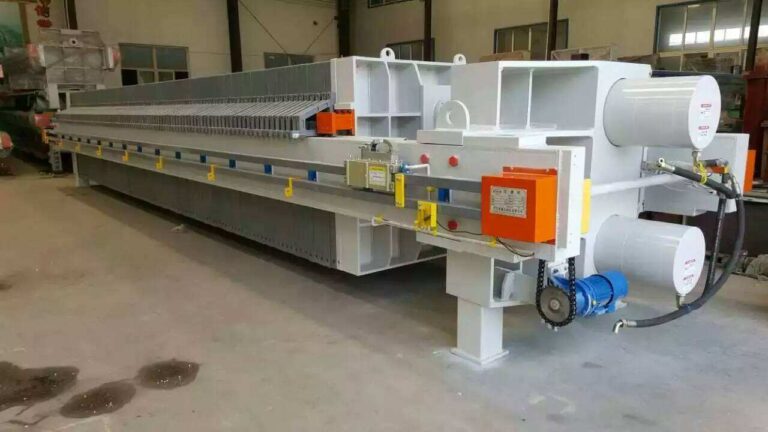
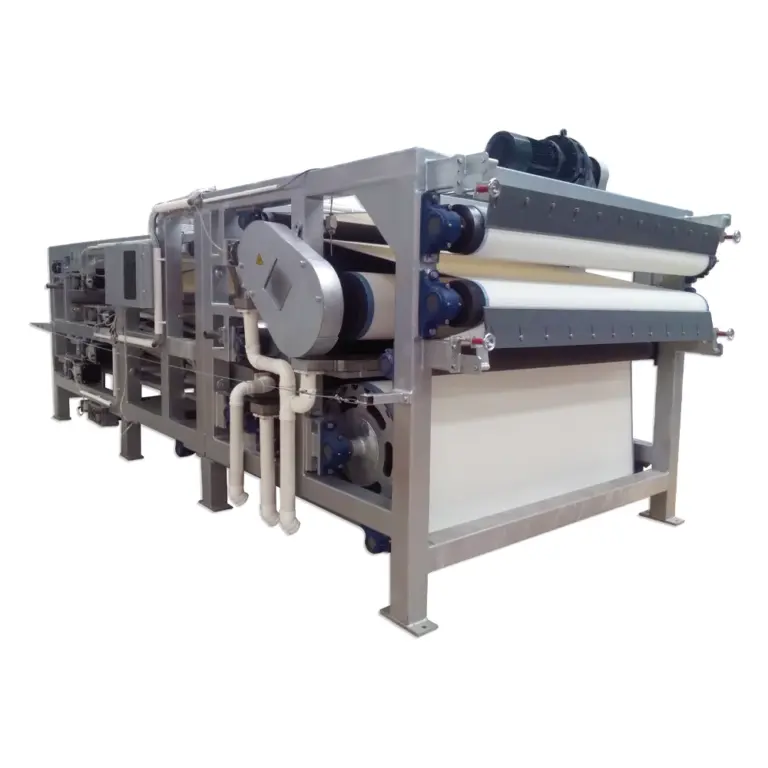
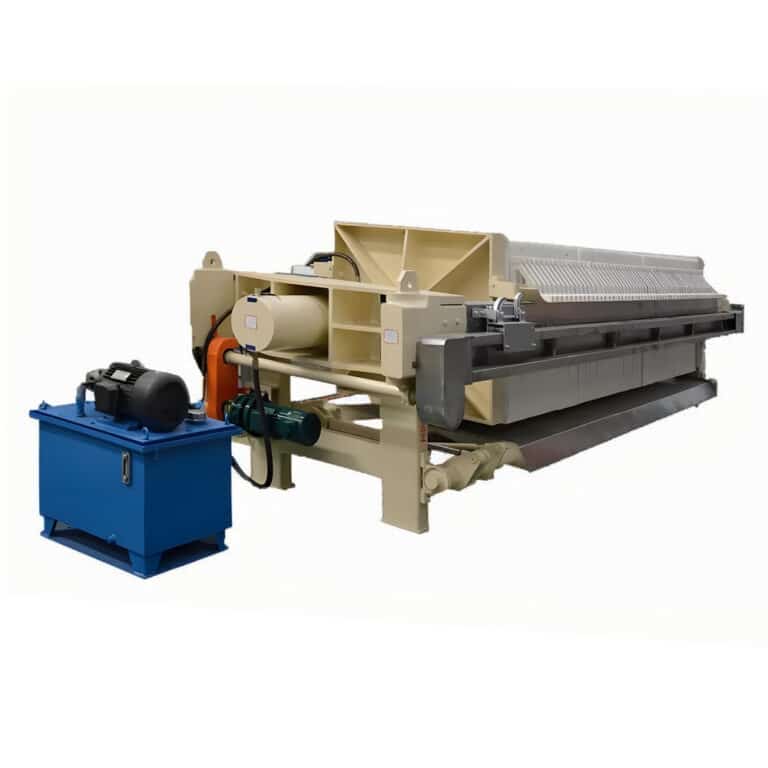
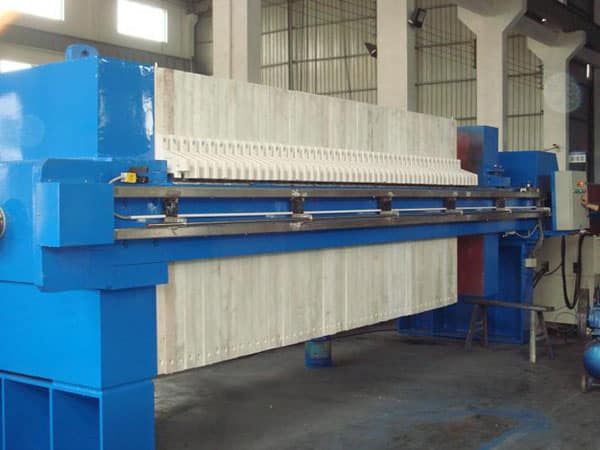
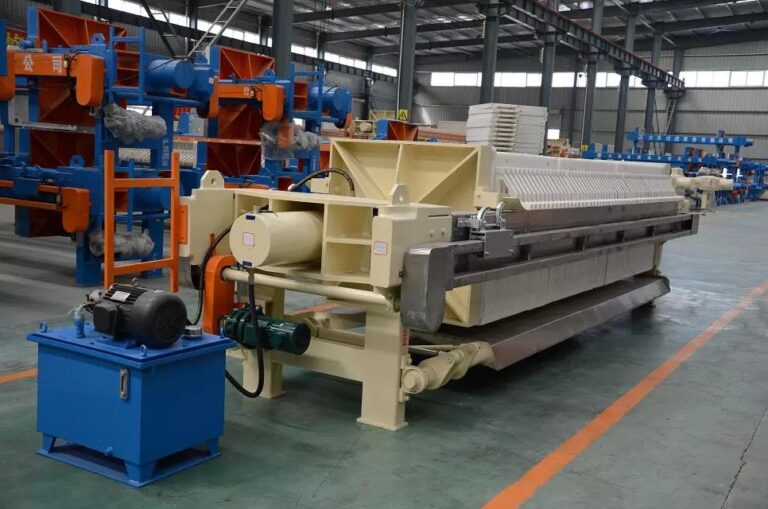
The second conflict point is less obvious but equally consequential: dosing pumps are also used in sludge transfer and sludge treatment stages downstream of the clarifier. When dosing system scope is defined only around coagulation chemistry and the primary treatment stage, the sludge handling duties that fall on the same equipment category often go unaccounted. A dosing package specified to deliver coagulant to the clarifier inlet may be technically adequate for that duty but undersized or incompatible with the flow rates, pressures, and chemical types involved in sludge conditioning and dewatering. Reconciling those duties during design — rather than discovering them during plant startup — determines whether the sludge handling system performs on the timeline the plant’s operational schedule depends on. For plants using a Riemfilterpers for downstream dewatering, the polymer conditioning duty upstream of the press must be included in the dosing system scope from the outset.
Hoe recyclewaterdoelen de dosering en tankselectie veranderen
Once a plant is targeting water reuse rather than discharge compliance alone, the dosing system scope expands in ways that are not always captured in the initial design brief. Primary coagulation handles suspended solids removal. Recycle loops — particularly cooling water and boiler feedwater applications — introduce a second set of chemical requirements: scale inhibitors to prevent mineral deposition, corrosion inhibitors to protect metal surfaces, and biocides to control biological growth. Each of those chemicals has its own dosing regime, its own pump and materials compatibility requirements, and its own tank sizing logic.
The planning error that surfaces most often in reuse upgrade projects is treating the primary dosing system as extendable to secondary chemical applications without reassessing tank volume, pump type, and materials compatibility. Scale inhibitors and corrosion inhibitors are typically dosed at concentrations and flow rates that differ substantially from coagulant dosing. Biocide dosing often requires containment and handling provisions that primary coagulation systems are not designed for. Assuming that the existing skid can absorb these additional duties — or that a future expansion can address them — creates a reuse system that meets discharge targets but fails to sustain the recycle water quality that justified the investment.
The EPA Guidelines for Water Reuse provide useful process-level framing for what reuse water quality targets typically look like across different end-use applications, and those targets are the correct starting point for defining the full chemical scope before tank and pump selection begins. The concrete implication for procurement is that reuse targets must be specified before equipment selection — not after — because the chemical scope they define changes the number of dosing points, the tank configuration, and the pump types that the system requires.
Welk productpad past bij een stabiele upgrade voor industrieel hergebruik
The choice between a simpler peristaltic pump-based dosing package and a fully automated PLC-controlled system is often presented as a cost decision. It is more accurately a variance decision. The question is not which system is technically superior in general — it is which system is appropriately matched to the variability that the plant’s influent stream actually exhibits.
The practical risk in choosing the simpler path is that most plants underestimate influent variance until recycle water quality becomes a compliance problem. A stream that appears stable during the characterization period may exhibit significant concentration swings during production changeovers, seasonal raw material shifts, or upstream process upsets. A peristaltic system operating on fixed pump settings cannot respond to those swings automatically, which means operators carry the correction burden. When that burden becomes frequent enough, it begins to negate the cost advantage of the simpler system.
| Type systeem | Belangrijkste kenmerken | Beste voor |
|---|---|---|
| Peristaltic Pump-Based | High accuracy; suitable for viscous/corrosive chemicals; low maintenance; lower upfront cost | Stable, simpler wastewater streams with minimal variance |
| Fully Automatic with PLC Control | Closed-loop control; continuous high-precision dosing; minimizes manual corrections | Plants with variable influent chasing stable recycle water or tight compliance margins |
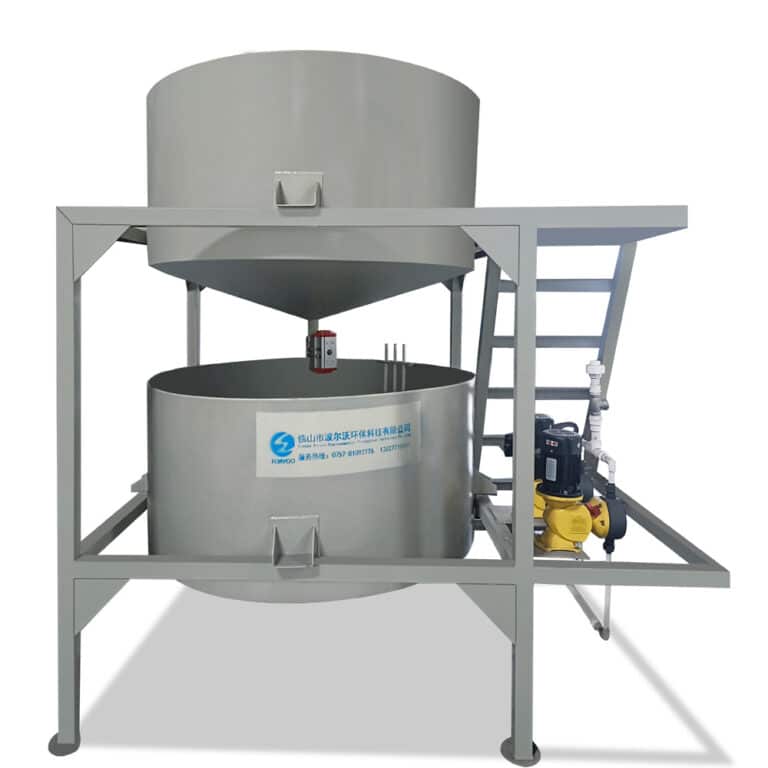
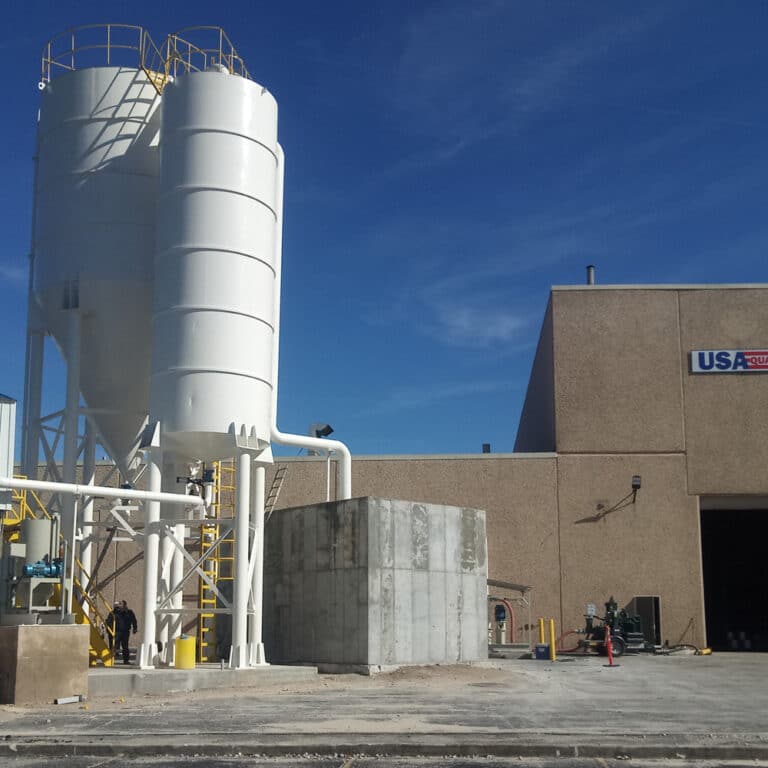
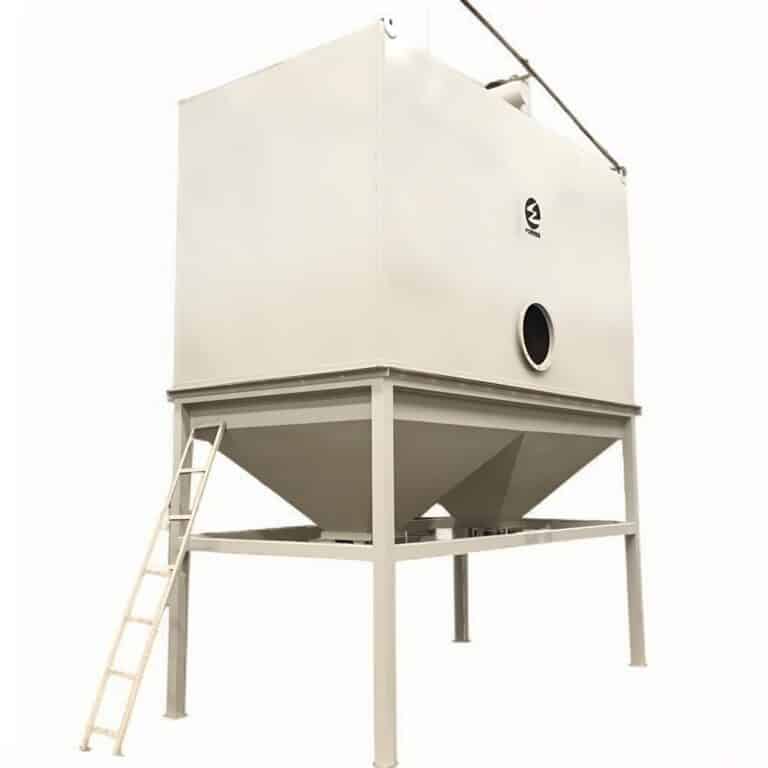
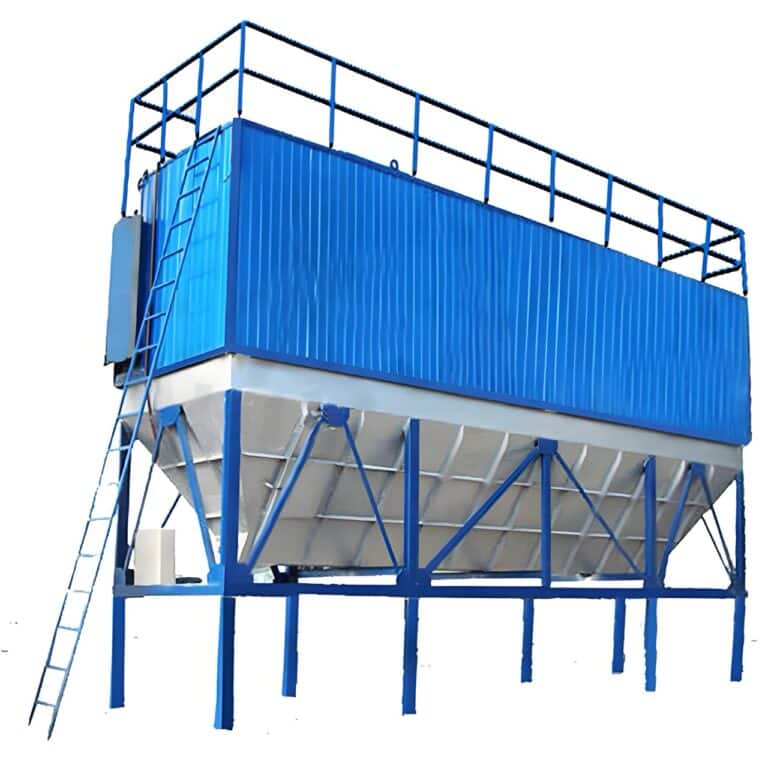
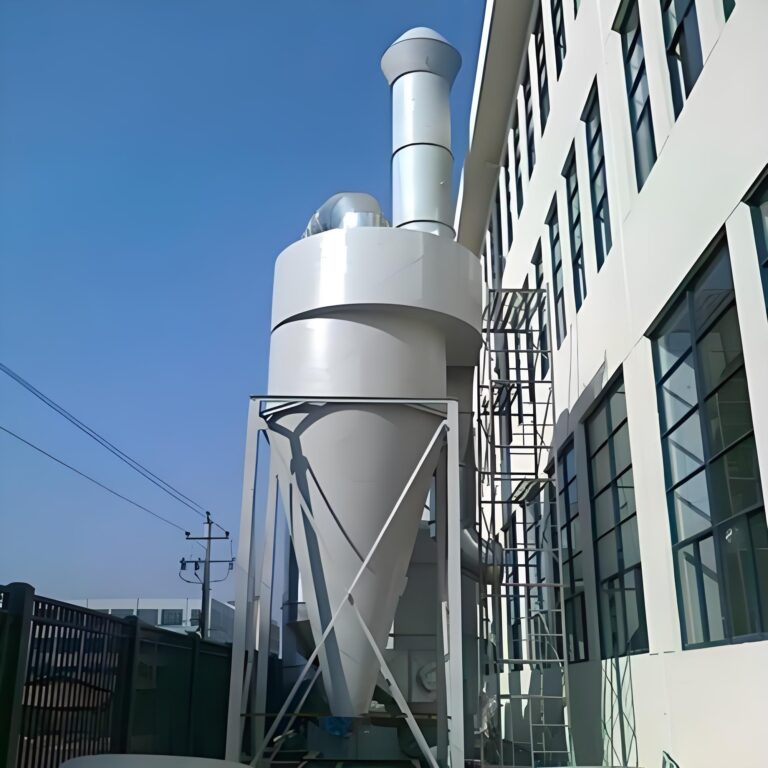
The decision logic that follows from this is that the simpler path is defensible only when the plant has genuine, documented evidence of low influent variance — not an assumption of stability. A fully automated system with closed-loop control and real-time sensor feedback is the more appropriate choice when the plant is chasing tight recycle water targets, operating under compliance margins that leave little tolerance for effluent excursions, or managing a stream where solids concentration and pH shift meaningfully across the production cycle. The PAM/PAC intelligent systeem voor chemische dosering addresses the high-variance, high-precision end of that spectrum — with automation designed to reduce the manual correction burden that undermines process stability during production swings. For plants where clarifier performance is the primary constraint, pairing the dosing system with a Verticale bezinktoren designed for the same solids loading range keeps the hydraulic and chemical design logic aligned rather than resolved separately. For detailed guidance on how these systems are typically configured and automated in practice, the Chemical Dosing Systems PAM PAC Automation Guide covers the automation logic in greater depth.
Welke goedkeuringschecklist moet worden afgesloten voor de inkoop
Procurement decisions made before the technical checklist is complete do not accelerate the project — they move the unresolved technical questions into the fabrication or commissioning phase, where addressing them is slower and more expensive. The three verification items that most consistently get deferred until after procurement are materials compatibility confirmation, accessories specification, and maintenance provisions.
Each of these carries a distinct risk profile when closed late. Materials compatibility — verifying that pump wetted components are rated for the specific chemical, temperature, and pressure conditions of the application — is the item most likely to produce early operational failures when skipped. Incompatible materials may perform adequately during initial commissioning but degrade on a timeline that is not apparent until the first maintenance interval or the first audit cycle. The failure mode is not sudden; it is gradual loss of sealing integrity, dimensional stability, or chemical resistance that compromises dosing accuracy before it produces a visible system failure.
| Checkpoint | Risk if Overlooked | Wat bevestigen? |
|---|---|---|
| Ease of maintenance & spare parts availability | Increased downtime and long-term operating costs | Modular design and availability of easily replaceable components (e.g., tubing) |
| Inclusion of required accessories (calibration columns, safety valves) | Reduced accuracy, durability, or unsafe operation | All specified accessories are listed and their purpose documented |
| Pump material compatibility with operating environment | Premature failure from temperature, pressure, or chemical exposure | Materials are rated for the specific chemical and environmental conditions |
The accessories specification item is frequently underweighted because the individual components involved — calibration columns, back pressure valves, safety relief valves — appear minor relative to the pump itself. In practice, a dosing system without a calibration column cannot be easily verified against actual delivery volume, which means that dosage accuracy becomes an assumption rather than a measured value. A system without a properly rated safety relief valve creates a pressure management risk that is difficult to defend during facility inspection. Closing these items before procurement does not require additional project time if they are included in the specification document from the outset — the cost of oversight is that they must be retrofitted under operating conditions, which is when minor omissions become genuine maintenance and safety complications.
The design sequence that produces a stable, defensible coagulation and reuse system is not a linear checklist — it is a set of interdependent decisions that must be resolved in the right order. Wastewater characterization defines the chemical scope. Jar testing establishes the dosage baseline and settling expectations for that specific stream. Clarifier loading and sludge withdrawal capacity must be reconciled against the full solids load, including chemical preparation contributions, before equipment is sized. Reuse water targets must be specified before tank and pump selection, because they expand the chemical scope beyond primary coagulation. Product path selection follows from honest assessment of influent variance, not from cost preference alone.
Before procurement closes, the three checklist items that most often create downstream problems — materials compatibility, accessories specification, and maintenance provisions — should be confirmed in writing against the actual operating conditions, not against generic specifications. A system that is technically correct on paper but procured without those confirmations creates the same risk as one that was never designed at all: the gap surfaces at commissioning, during the first audit, or during the first production swing where effluent quality is already under pressure.
Veelgestelde vragen
Q: What happens if jar testing was never completed before the dosing system was already purchased?
A: Procuring a dosing system without jar test results means the dosage range, coagulant type, and settling expectations have no site-specific baseline — so the equipment is effectively sized against assumptions rather than measured data. In practice, this surfaces as dosage drift during early operation, where operators adjust pump settings reactively because no defensible target range exists. The remediation path is to run jar testing against the actual influent stream before commissioning is finalized and use the results to reset pump operating parameters, even if the hardware cannot be changed. This will not recover pump or tank geometry decisions that were already fixed incorrectly, but it at least replaces assumption-based settings with a measured baseline before the system enters routine operation.
Q: At what level of influent variability does a peristaltic pump system stop being an appropriate choice?
A: A fixed-setting peristaltic system becomes inappropriate when solids concentration, pH, or flow rate shift meaningfully within a single operating shift rather than gradually across seasons. The practical threshold is not a precise number — it is whether operators are correcting pump settings more than once per shift to maintain acceptable effluent quality. When that correction frequency is already anticipated during design, or when the plant is operating under compliance margins that leave little tolerance for excursions between corrections, the manual adjustment burden of a simpler system has already exceeded its cost advantage. At that point, a fully automated system with closed-loop control is the more defensible choice, not a premium option.
Q: Once the dosing and clarification system is commissioned and stable, what is the correct next step before the reuse loop is brought online?
A: Before routing clarifier effluent into a reuse loop, the full chemical scope for the reuse application must be confirmed against actual recycle water quality targets — not assumed from primary treatment performance. Cooling water and boiler feedwater loops require scale inhibitors, corrosion inhibitors, and biocides, each with its own dosing point, tank, and materials compatibility requirements. The next step is to verify that those secondary dosing provisions were included in the original system scope, and if they were not, to assess whether the existing skid can absorb those duties without compromising primary coagulation performance. Bringing the reuse loop online before that verification is complete risks meeting discharge targets while failing to sustain the recycle water quality that the investment was built around.
Q: Does a simpler dosing package paired with a well-sized clarifier deliver comparable long-term water quality to a fully integrated automated line?
A: For genuinely low-variance influent streams, a simpler dosing package can deliver comparable effluent quality at lower capital cost — but comparable performance depends entirely on operators maintaining correct pump settings as influent conditions drift. The difference that an integrated automated line resolves is not peak performance under stable conditions; it is the quality floor during production swings, seasonal shifts, and upstream process upsets. A simpler system maintains quality when settings are current and conditions are predictable. An automated system maintains quality when neither of those conditions holds. The trade-off is therefore between capital cost savings and the operational reliability margin the plant needs when conditions are not predictable — which most plants underestimate until a compliance event occurs.
Q: If sludge withdrawal was undersized relative to actual clarifier loading, is that correctable without replacing the clarifier?
A: In many cases, yes — but the correction options narrow quickly depending on how severely the withdrawal system was undersized. If the mismatch is moderate, increasing withdrawal cycle frequency and adjusting pump duty settings can partially compensate, though this increases wear on withdrawal equipment and may exceed the original operating cost assumptions. If the chemical preparation method is contributing additional solids load that was not accounted for during clarifier sizing, switching to a pre-dissolved liquid coagulant product can reduce that contribution without modifying the tank geometry. What cannot be corrected without physical modification is a sludge blanket that consistently rises to the effluent zone because the clarifier surface area is genuinely insufficient for the actual solids loading — at that point, the only reliable remediation is either a parallel treatment stage or a clarifier replacement.