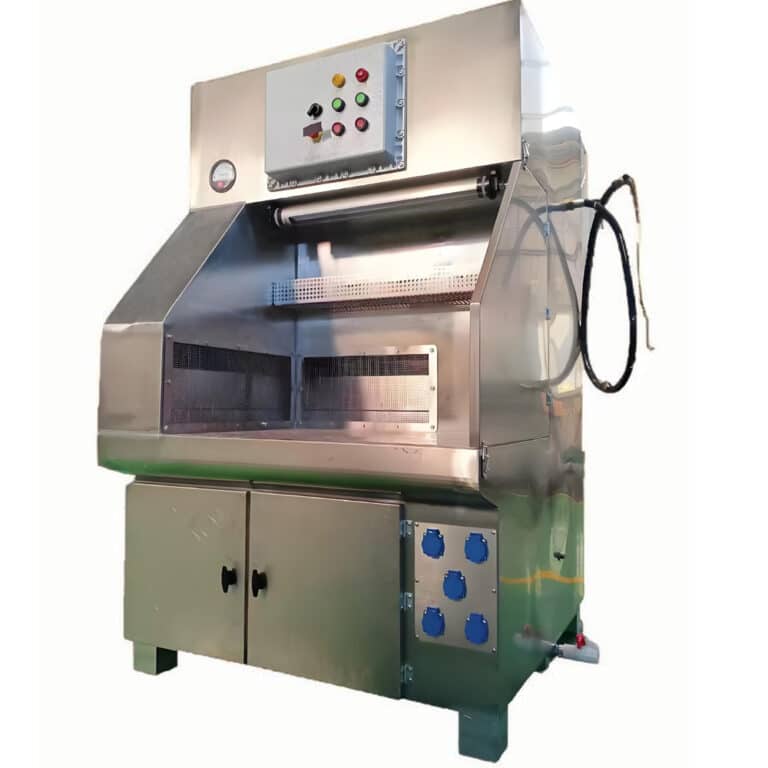
Voor kleine metaalbewerkingsbedrijven is de keuze van een stofafzuigsysteem een kritieke kapitaalbeslissing. De meest voorkomende fout is dat men zich alleen concentreert op het prijskaartje van de machine en de operationele impact van een onjuiste CFM-maat onderschat. Een ondermaats systeem faalt in zijn primaire taak - het afvangen van gevaarlijk stof - wat leidt tot nalevingsproblemen, een slechte luchtkwaliteit en een verhoogde slijtage van de machine. Omgekeerd verspilt een te grote unit kapitaal en verbruikt hij buitensporig veel energie. Het bereik van 1.000-3.000 CFM vertegenwoordigt een strategisch buigpunt waar nauwkeurige planning een maximaal operationeel en financieel rendement oplevert.
Over deze precisie valt vandaag de dag niet meer te onderhandelen. De regelgeving op het gebied van luchtkwaliteit en veiligheid van brandbaar stof wordt steeds strenger. Gezondheidsnormen voor werknemers en verzekeringspremies zijn direct gekoppeld aan een effectieve stofbeheersing. Een stofafscheider met cartridge met de juiste afmetingen is geen overheadkosten, maar een belangrijke productiviteitsfactor. Het beschermt uw werknemers, beveiligt uw apparatuur en zorgt voor naleving van de regelgeving, waardoor een nauwkeurige capaciteitsplanning een fundamentele bedrijfsactiviteit wordt.
Hoe berekent u uw exacte CFM-behoeften?
Het nauwkeurig bepalen van de vereiste kubieke voet per minuut (CFM) is de basisstap voor een effectieve stofafzuiging. De beoogde CFM is geen vast getal, maar wordt berekend op basis van de specifieke stofbronnen en de vereiste afzuigsnelheid op elk punt.
De basis van systeemontwerp
Voor kleine winkels betekent dit dat de CFM die nodig is voor elke machinekap of omkasting bij elkaar opgeteld moet worden. Een goed ontworpen afzuigkap heeft minder CFM nodig om effectief stof af te vangen dan een slecht geplaatste afzuigkap, wat een directe invloed heeft op de grootte en de kosten van het systeem. De hoge kosten van ondermaatse afzuiging reiken verder dan slechte stofafzuiging en omvatten frequente filtervervangingen, hoger energieverbruik, buitensporige stilstand en niet-naleving van regelgeving. Bereken altijd voor uw werkelijke werkzaamheden, niet voor theoretische piekbelastingen, om er zeker van te zijn dat het systeem voldoende luchtstroom levert om stof van alle actieve bronnen tegelijkertijd op te vangen en af te voeren.
Veelvoorkomende valkuilen bij berekeningen vermijden
Experts uit de sector raden aan om te beginnen met de CFM-aanbevelingen van de fabrikant voor elk apparaat, maar deze vervolgens te valideren aan de hand van uw specifieke kanaalindeling. Details die gemakkelijk over het hoofd worden gezien zijn onder andere het rekening houden met toekomstige machine-uitbreidingen en de gelijktijdige gebruiksfactor van uw apparatuur. Volgens onderzoek in technische documentatie zijn veelgemaakte fouten het verwaarlozen van de invloed van kanaalweerstand in de planningsfase, wat de geleverde CFM met 20% of meer kan verlagen.
| Factor | Invloed op CFM | Belangrijke overwegingen |
|---|---|---|
| Efficiënt ontwerp kap | Hoog | Vermindert direct de vereiste CFM |
| Gevolgen van te lage dimensionering | Ernstig | Frequente filtervervanging, stilstand |
| Basis systeemontwerp | Werkelijke activiteiten | Geen theoretische piekbelastingen |
Bron: Technische documentatie en industriespecificaties.
Belangrijke factoren die de totale CFM van uw systeem beïnvloeden
Uw berekende CFM-eis wordt dynamisch beïnvloed door verschillende fysieke systeemfactoren. De lay-out van het kanaal (lengte, diameter en aantal bochten) creëert een statische drukweerstand die de ventilator moet overwinnen om toch de beoogde CFM aan de bron te leveren.
De kanaal- en drukvergelijking
Het ontwerp van de ventilator en de waaier is een verborgen prestatievariabele; het vermogen van een ventilator om zijn nominale CFM te leveren hangt af van de statische druk van het systeem, die wordt bepaald door het leidingwerk. Door de stofafscheider dicht bij de stofbronnen te plaatsen, worden de doorlooptijden en het drukverlies geminimaliseerd. Mijn ervaring is dat winkels die hun kanalen in kaart brengen voordat ze een ventilator kiezen, de dure fout vermijden dat ze een eenheid kopen die de statische druk van hun systeem niet kan overwinnen.
Materiaaleigenschappen als ontwerpstimulans
De dichtheid en de deeltjesgrootte van het materiaal beïnvloeden de vereiste transportsnelheid in de kanalen. Schurend of kleverig stof kan een robuuster kanaal of een ander inlaatontwerp vereisen, wat indirect van invloed is op de druk en de uiteindelijk geleverde CFM. Voor fijne, lichte poeders is het handhaven van voldoende snelheid om bezinking in horizontale kanalen te voorkomen een belangrijk aandachtspunt dat van invloed is op de totale CFM van het systeem.
De juiste lucht/doek-verhouding voor uw werkplaats kiezen
De verhouding lucht/doek (A/C) - de CFM van het systeem gedeeld door de totale oppervlakte van het filtermedium - bepaalt de fysieke grootte en de operationele efficiëntie van uw filterbank. Voor fijn, droog metaalstof is een conservatieve verhouding tussen 3:1 en 4:1 (3-4 CFM per vierkante voet) standaard.
De prestatieafweging begrijpen
Dit is een kritische afweging bij de dimensionering. Een lagere verhouding (meer filteroppervlak) zorgt voor een langere levensduur van de filter, minder vaak reinigen en een lagere werkdruk, maar vereist een grotere, duurdere afscheider. Een hogere verhouding verlaagt de initiële grootte en kosten, maar verhoogt de operationele belasting, reinigingscycli en onderhoudskosten op lange termijn. Voorrang geven aan een iets lagere verhouding is vaak een strategische investering in lagere totale eigendomskosten.
De verhouding toepassen op uw CFM
De volgende tabel laat zien hoe de lucht/doek-verhouding zich vertaalt in fysiek filteroppervlak voor een gangbare systeemgrootte, wat een directe invloed heeft op de operationele prestaties en kosten.
| Verhouding (CFM:m²) | Filteroppervlak voor 1.800 CFM | Operationele gevolgen |
|---|---|---|
| 3:1 (Conservatief) | 600 m². | Langere levensduur van filter, lagere druk |
| 4:1 (standaard) | 450 m². | Evenwicht tussen kosten en prestaties |
| >4:1 (Agressief) | <450 m². | Meer onderhoud, frequente reiniging |
Opmerking: Voor fijn, droog metaalstof is een verhouding van 3:1 tot 4:1 standaard.
Bron: Technische documentatie en industriespecificaties.
Cartridge filtermedia: Vergelijking van prestaties en kosten
Het selecteren van filtermedia is een directe afweging tussen initiële investering en operationele rendabiliteit op lange termijn. Standaard polyester mengsels zijn kosteneffectief voor algemene toepassingen. Voor fijne sub-micron metaalpoeders bieden spunbond of membraanmedia een superieure oppervlaktebelasting en afgifte.
De economie van geavanceerde media
Van cruciaal belang is dat nanovezelmedia de onderhoudseconomie veranderen. Door de oppervlaktelading van stof behouden ze een lagere drukval, verlagen ze de pulsreinigingsfrequentie en het persluchtverbruik en verlengen ze de levensduur van de filters, waardoor de hogere initiële kosten worden gecompenseerd. Voor brandbaar stof zijn geleidende of vlamvertragende media onontbeerlijk en voorgeschreven door normen zoals NFPA 484: Norm voor brandbare metalen.
Media afstemmen op je stof
De stofeigenschappen bepalen de systeemarchitectuur en de kosten, aangezien abrasieve stoffen duurzame media vereisen en olieachtige nevels speciale PTFE-coatings kunnen vereisen. De keuze van uw media bepaalt in grote mate de prestaties van het systeem en de onderhoudslast. De prestaties van deze mediatypen zijn geclassificeerd volgens internationale normen zoals ISO 16890-1: Luchtfilters voor algemene ventilatie, die het kader vormt voor de evaluatie van de efficiëntie van het afvangen van deeltjes.
| Type media | Initiële kosten | Langetermijnvoordeel |
|---|---|---|
| Standaard polyester | Laag | Kosteneffectief voor algemeen gebruik |
| Spunbond / Membraan | Medium | Superieure afscheiding van fijnstof |
| Nanovezel | Hoog | Lagere drukval, minder reiniging |
| Geleidend / FR | Hoog | Verplicht voor brandbaar stof |
Bron: ISO 16890-1: Luchtfilters voor algemene ventilatie. Deze norm voorziet in een classificatiesysteem voor filterefficiëntie op basis van deeltjesvangst, wat fundamenteel is voor het evalueren van de prestatieclaims van verschillende mediatypen zoals nanovezel- of membraanfilters.
Keuze van ventilatoren: Achteroverhellende versus radiale waaiers
De ventilator moet voldoende druk genereren om de weerstand van het systeem te overwinnen en tegelijkertijd de beoogde CFM leveren. Twee waaierontwerpen zijn relevant voor dit CFM-bereik.
Waaiertypes en hun toepassingen
Ventilatoren met achterwaarts gebogen schoepen zijn energie-efficiënter voor toepassingen met schone lucht (zoals de schone-luchtzijde van een collector), maar zijn minder goed bestand tegen stromen vol deeltjes. Ventilatoren met radiale schoepen (schoepenrad) zijn minder efficiënt maar robuuster, behouden een consistente CFM als de druk toeneemt en kunnen beter omgaan met schurend stof, vaak aan de kant van de vuile-luchtinlaat. Het is van cruciaal belang om het ontwerp van de blower en de waaier te begrijpen als een verborgen prestatievariabele.
De ventilator afstemmen op de kromme
De prestatiecurve van de geselecteerde ventilator moet uw vereiste CFM en berekende statische druk snijden in de buurt van de piekefficiëntie. Een onjuiste overeenkomst leidt tot onvoldoende luchtstroom of overmatig energieverbruik. We hebben prestatiecurves vergeleken en ontdekten dat het selecteren van een ventilator uitsluitend op basis van CFM, zonder statische druk, resulteert in een systeem dat het ontwerpluchtdebiet niet kan halen.
| Type waaier | Efficiëntie | Beste toepassing |
|---|---|---|
| Achterovergebogen | Hoog | Schone lucht, energie-efficiënt |
| Radiaal Blad (Peddel) | Medium | Vuile luchtinlaat, schurend stof |
| Belangrijkste selectiefactor | Prestatiecurve | Moet overeenkomen met CFM en statische druk |
Bron: Technische documentatie en industriespecificaties.
Praktische installatie: Ruimte, leidingen en systeemindeling
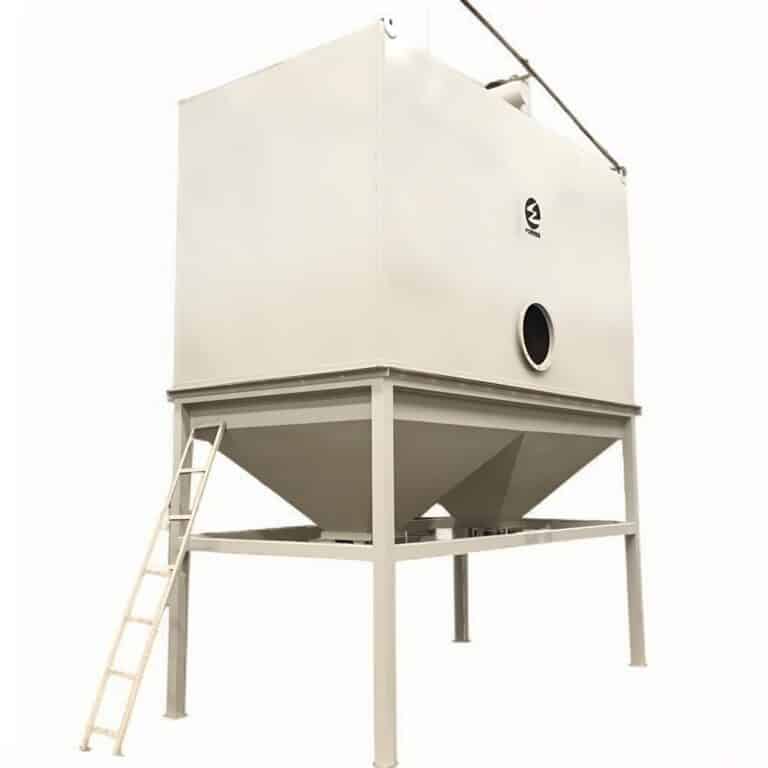
Effectieve installatie maximaliseert de prestaties en minimaliseert de kosten. Het bereik van 1.000-3.000 CFM is een strategisch strijdtoneel voor OEM's, waarbij veel OEM's compacte, modulaire units aanbieden.
Modulair ontwerp benutten
Deze modulariteit is een strategische hefboom voor kosten en flexibiliteit, waardoor systemen kunnen worden uitgebreid of opnieuw geconfigureerd om in lijn te blijven met bedrijfsgroei. Plaatsing is essentieel: door de stofafscheider dicht bij de primaire stofbronnen te plaatsen, wordt het leidingwerk geminimaliseerd, waardoor het statische drukverlies en het benodigde ventilatorvermogen afnemen. Voor binnenunits die lucht recirculeren, moet aan strenge filtratievereisten worden voldaan. ANSI/ASHRAE 52.2 voor MERV 15+ ratings is verplicht.
Planning voor materiaaltransport
De stofafvoer moet overeenkomen met het volume; een trommel kan volstaan voor lichte ladingen, terwijl voor continu gebruik een afgesloten roterende luchtsluis nodig is. Deze praktische planning zorgt ervoor dat de ontworpen CFM daadwerkelijk bij de kap wordt geleverd. Goed ontworpen leidingen voor een modulair patroon stofafscheidingssysteem is essentieel om de volledige prestatie van de berekende CFM te realiseren.
NFPA-naleving voor brandbaar metaalstof waarborgen
Voor werkplaatsen die aluminium, titanium of andere brandbare metalen verwerken, is naleving van de NFPA-normen een integraal onderdeel van het systeemontwerp. Dit gaat verder dan het bepalen van de basisafmetingen van de CFM tot het verplicht stellen van kritieke veiligheidslagen.
Verplichte veiligheidsvoorzieningen
De markt is verdeeld in prestatieniveaus, met gespecialiseerde vonkvrije en explosieveilige units die nodig zijn voor dit risicoprofiel. Belangrijke kenmerken zijn explosieontlasting gericht op een veilig gebied, vlamvertragende filtermedia, vonkafscherming bij de inlaat, isolatiekleppen en uitgebreide aarding van het systeem om statische elektriciteit af te voeren. De stofeigenschappen bepalen hier in belangrijke mate de systeemarchitectuur en de kosten, aangezien deze verplichte veiligheidscomponenten de systeemkosten kunnen opdrijven.
Het regelgevend kader
Naleving is onontkoombaar voor operationele veiligheid en verzekering. De volgende tabel geeft een overzicht van de belangrijkste veiligheidsfuncties die worden aangestuurd door NFPA 484: Norm voor brandbare metalen, die de definitieve vereisten voor deze systemen bevat.
| Veiligheidseigenschap | Doel | Bestuurder regelgeving |
|---|---|---|
| Explosieventilatie | Drukontlasting | NFPA 484 |
| Vlamvertragende media | Ontsteking voorkomen | NFPA 484 |
| Vonk Arrestantie | Inlaatbeveiliging | NFPA 484 |
| Systeemaarding | Statische dissipatie | NFPA 484 |
Bron: NFPA 484: Norm voor brandbare metalen. Deze norm schrijft de specifieke veiligheidskenmerken voor die worden genoemd voor stofverzamelingssystemen die brandbaar metaalstof verwerken om het brand- en explosiegevaar te beperken.
Totale kosten van eigendom: Kapitaal, energie en onderhoud
Een holistische kijk op de kosten is essentieel voor een goede investering. De kapitaaluitgaven omvatten de collector, leidingen en veiligheidsaccessoires. De operationele kosten domineren echter op lange termijn.
Operationele kosten opsplitsen
Het energieverbruik wordt bepaald door de ventilatormotor en de perslucht voor het reinigen; een efficiënte ventilator en nanovezelmedia die de reinigingscycli verkorten, verlagen deze kosten direct. Onderhoud omvat het vervangen van filters, slijtageonderdelen en afvalverwijdering. Datagestuurd onderhoud wordt een standaardvoorziening; het gebruik van een drukverschilmeter om de filterconditie te controleren maakt voorspellend, op de behoefte gebaseerd onderhoud mogelijk, waardoor de levensduur van componenten wordt gemaximaliseerd en ongeplande stilstand wordt voorkomen.
Het volledige financiële plaatje evalueren
De kritische afweging in lucht/doek-verhouding heeft een directe invloed op deze lopende kosten. Het evalueren van de TCO, niet alleen de aanschafprijs, zorgt ervoor dat het systeem een efficiënt bedrijfsmiddel is en geen terugkerende verplichting. Het volgende raamwerk helpt om deze kosten te categoriseren en er een strategie voor op te stellen.
| Kosten Categorie | Belangrijkste drijfveren | Strategie voor kostenverlaging |
|---|---|---|
| Kapitaaluitgaven (CAPEX) | Collector, leidingen, veiligheid | Lucht/doek-verhouding optimaliseren |
| Energieverbruik | Ventilatormotor, perslucht | Efficiënte ventilator, nanovezelmedia |
| Onderhoud | Filtervervanging, slijtageonderdelen | Datagestuurd voorspellend onderhoud |
| Dominante kosten op lange termijn | Operationeel (Energie & Onderhoud) | Holistische TCO-evaluatie |
Bron: Technische documentatie en industriespecificaties.
Effectieve planning van stofafscheiding is gebaseerd op drie prioriteiten: het berekenen van de CFM op basis van het werkelijke ontwerp van de afzuigkap en de statische druk in het leidingwerk, het selecteren van een lucht/doek-verhouding en filtermedia die de operationele kosten op lange termijn optimaliseren en het vanaf het begin integreren van alle verplichte veiligheidsvoorzieningen voor uw specifieke stofrisico. Deze gedisciplineerde aanpak verandert de stofafscheider van een nalevingsitem in een betrouwbaar productiemiddel.
Hebt u professionele begeleiding nodig bij het specificeren van een systeem dat de juiste CFM levert voor de unieke lay-out en materialen van uw werkplaats? Het ingenieursteam van PORVOO kan u helpen bij de kritische afwegingen tussen prestaties, veiligheid en totale eigendomskosten. Neem contact met ons op om de vereisten voor uw toepassing te bespreken.
Veelgestelde vragen
V: Hoe bereken je de vereiste CFM voor meerdere machines in een kleine werkplaats?
A: U moet de benodigde CFM voor elke machinekap sommeren op basis van de specifieke afzuigsnelheid, en geen algemene schatting gebruiken. Een goed ontworpen kap vermindert de vereiste luchtstroom, waardoor de systeemkosten en het energieverbruik direct dalen. Dit betekent dat faciliteiten moeten rekenen voor hun werkelijke gelijktijdige activiteiten om de hoge operationele kosten en nalevingsrisico's van een te kleine afzuiging te vermijden.
V: Wat is de praktische invloed van de lucht/doek-verhouding op de prestaties en kosten van mijn stofafscheider?
A: De lucht/doek-verhouding is een kritische afweging tussen initiële kapitaaluitgaven en bedrijfskosten op lange termijn. Een conservatieve verhouding (bijv. 3:1 tot 4:1 voor fijn metaalstof) gebruikt meer filteroppervlak, verlaagt de drukval en verlengt de levensduur van het filter. Voor projecten waar uptime en onderhoudsbudgetten beperkt zijn, moet u rekening houden met een iets grotere initiële investering in filtermedia om uw totale eigendomskosten te verlagen.
V: Waarom is het ontwerp van de ventilatorwaaier een kritieke verborgen variabele bij de selectie van stofafscheiders?
A: De ventilator moet de beoogde CFM leveren tegen de statische druk van het systeem, en de keuze van de waaier bepaalt de efficiëntie en duurzaamheid. Ventilatoren met achterwaarts gebogen schoepen zijn efficiënt voor schone lucht, terwijl radiale schoepen beter overweg kunnen met schurende stofstromen aan de kant van de vuile lucht. Als uw bedrijf zware of schurende stofdeeltjes genereert, moet u voorrang geven aan een robuuste ventilator die de CFM onder belasting handhaaft, zelfs als dit ten koste gaat van de efficiëntie.
V: Wat zijn de verplichte NFPA-kenmerken voor een stofafscheider die brandbaar metaalstof verwerkt?
A: Systemen voor metalen zoals aluminium of titanium vereisen geïntegreerde veiligheidslagen die verder gaan dan basisfiltratie. Tot de belangrijkste kenmerken behoren explosieontluchting, vlamvertragende filtermedia, inlaatbeveiliging tegen vonken en uitgebreide aarding van het systeem per NFPA 484: Norm voor brandbare metalen. Dit betekent dat winkels die deze materialen verwerken, moeten budgetteren voor deze gespecialiseerde, niet-onderhandelbare onderdelen om te voldoen aan de veiligheids- en verzekeringseisen.
V: Hoe beïnvloedt de keuze van filtermedia de rendabiliteit van een stofverzamelingssysteem op lange termijn?
A: De keuze van media bepaalt rechtstreeks de onderhoudsfrequentie, het energieverbruik en de vervangingskosten. Terwijl standaard polyester kosteneffectief is, zorgen nanovezelmedia voor een oppervlaktelading van stof, een lagere drukval en een lager persluchtverbruik voor reiniging. Voor toepassingen met fijne, droge poeders compenseert het investeren in media met hogere prestaties vaak de initiële kosten door een langere levensduur van de filters en lagere operationele kosten.
V: Hoe moet u de fysieke installatie plannen om ervoor te zorgen dat uw systeem de nominale CFM levert?
A: Een effectieve lay-out minimaliseert de lengte en bochten van het leidingwerk om statische drukverliezen te beperken, die de luchtstroom in afzuigkappen kunnen verhinderen. Plaats de stofafscheider dicht bij de primaire stofbronnen en gebruik glad leidingwerk met de juiste afmetingen. Dit betekent dat faciliteiten met beperkte ruimte modulaire units moeten evalueren die flexibiliteit bieden, maar nog steeds prioriteit moeten geven aan een compact, efficiënt leidingplan om de ontworpen systeemprestaties te realiseren.
V: Welke meetgegevens moet je in de gaten houden om de totale eigendomskosten van een patroonstofafscheider te beheren?
A: Focus op het drukverschil over de filterbank en het energieverbruik. Een stijgende drukval duidt op filterbelasting en verhoogde ventilatorinspanning, wat een directe invloed heeft op de energiekosten en aangeeft dat er onderhoud nodig is. Het implementeren van datagestuurde bewaking maakt voorspellend onderhoud mogelijk, dus u moet van plan zijn om deze meetgegevens te gebruiken om onderhoud te plannen en te valideren dat de selectie van de lucht/doek-verhouding werkt zoals bedoeld.