실외 배기 휴대용 수집기에 대한 EPA NESHAP 규칙 6x 및 방법 22 테스트

For facility managers and environmental compliance officers in metal fabrication, the critical compliance challenge isn’t just understanding NESHAP Rule 6x—it’s executing a defensible action plan that satisfies EPA, OSHA, and NFPA requirements simultaneously. The rule’s applicability hinges on specific material thresholds and a visual emissions test, creating a procedural minefield where a single 15-minute observation can trigger mandatory, escalating federal corrective actions.

The urgency stems from the rule’s structured enforcement protocol and the significant financial risk of non-compliance. With penalties calculated per violation day and the mandate to install control devices after two failed tests, proactive planning is no longer optional. A strategic approach transforms this regulatory burden into an opportunity for operational improvement and energy savings.

How to Determine If Rule 6x Applies to Your Facility

Defining the Regulatory Scope

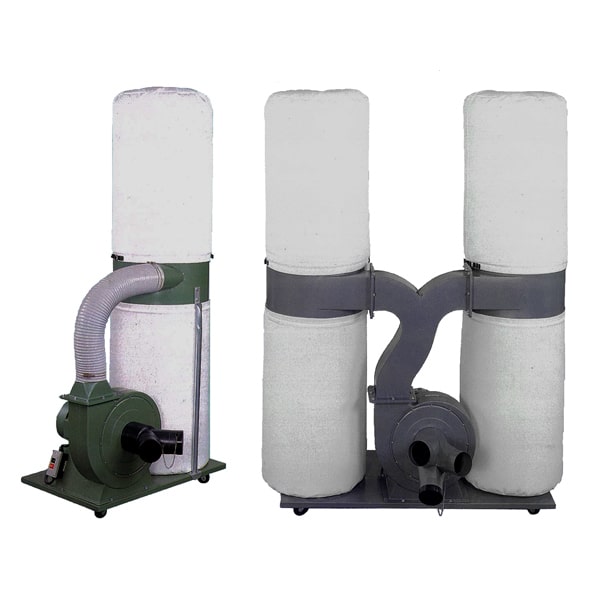
NESHAP Rule 6x specifically targets facilities engaged in metal fabrication and finishing. Core operations like welding, thermal spraying, grinding, and abrasive blasting are in scope if they use portable dust collectors that exhaust air outdoors. The first step is a facility-wide equipment audit to map all portable collection units and verify their exhaust termination points. Any unit venting outside becomes a potential regulated source.

The Material Analysis Gatekeeper

Applicability is definitively governed by your consumable materials. You must conduct a systematic review of Material Safety Data Sheets (SDSs) for all relevant items—welding wire, powders, coatings. The critical data is in Section 2 (Hazard Identification). The rule sets specific weight thresholds for Metal Finishing Hazardous Air Pollutants (MFHAPs): 0.1% for cadmium, chromium, lead, or nickel, and 1.0% for manganese. A procurement review focused on MFHAP content can be a direct cost-avoidance strategy, as sourcing materials below these thresholds may remove the operation from the rule’s jurisdiction entirely.

Conducting Your Facility Audit

A formal audit creates your compliance baseline. This isn’t a casual walkthrough; it requires documented verification. From my experience consulting with fabricators, the most common oversight is failing to check secondary operations or older equipment tucked away in corners. Your audit must cross-reference each outdoor-exhausting portable collector with the SDSs for the materials processed at that station. This documented correlation is your primary evidence for applicability determinations during an inspection.

Applicability FactorKey Threshold데이터 소스
Process OperationsMetal fabrication, finishingFacility audit
Consumable AnalysisSDS Section 2 reviewProcurement records
Cadmium, Chromium, Lead, Nickel≥ 0.1% by weightMaterial SDS
망간≥ 1.0% by weightMaterial SDS
Collector ExhaustOutdoor ventingEquipment survey

출처: 기술 문서 및 업계 사양.

This table outlines the key factors and thresholds for determining Rule 6x applicability, providing a checklist for your initial audit.

The Method 22 Test: Procedure and Failure Criteria

The Mandated Visual Protocol

The EPA Method 22 test is the compliance gatekeeper. It’s a visual procedure where a trained observer assesses visible emissions from the exhaust stack. The test conditions are non-negotiable: the observer must stand at least 15 feet away with the sun at their back, using a dark background for contrast. The observation period is a continuous, uninterrupted 15 minutes. This reliance on human observation under specific conditions highlights a current regulatory gap, suggesting facilities should prepare for a future shift towards continuous electronic monitoring.

Execution and Failure Threshold

During the test, the observer uses two synchronized stopwatches—one for total elapsed time and one to cumulatively time any visible emissions. Visible emissions are defined as any discernible plume, haze, or opacity. Failure is binary and strict: if visible emissions are observed for 20% or more of the observation period (3 minutes or more cumulatively), the test is failed. This single data point triggers the compliance enforcement protocol. Industry experts note that passing this test often requires filtration efficiency beyond what standard baghouses provide, pointing directly toward advanced cartridge solutions.

테스트 매개변수요구 사항Result / Threshold
Observer Position≥ 15 feet from stackClear line of sight
Observation Duration15 minutes continuousMandatory test period
Timing MethodTwo synchronized stopwatchesCumulative emission time
Failure CriteriaVisible emissions ≥ 20%≥ 3 minutes total
배경Sun at back, dark backdropOptimized visual detection

출처: EPA Method 22 – Visual Determination of Fugitive Emissions. This EPA document defines the official visual procedure for determining fugitive emissions, directly governing the compliance test for portable collectors under NESHAP Rule 6x.

This table summarizes the critical parameters and failure criteria for the EPA Method 22 test, which is the definitive compliance measure.

Compliance Pathways: Tier 1 vs. Tier 2 Corrective Actions

The Tier 1 Response: Process Modification

An initial Method 22 failure immediately activates the Tier 1 response. This requires formal notification to your EPA regional office and mandates initial corrective actions focused on process or material modification. Options include adjusting machine parameters (amperage, feed speed) or testing alternative consumables with lower MFHAP content. A critical constraint is that modifications must not violate the equipment manufacturer’s operating instructions. Following these adjustments, a second Method 22 test must be conducted. This tier offers a narrow window to resolve the issue without capital expenditure.

The Tier 2 Mandate: Control Device Installation

If the second Method 22 test also fails, the Tier 2 response is enforced immediately. This escalation leaves no room for delay or negotiation. It mandates the installation of an “acceptable control device” on the exhaust stream of the portable collector. For these units, the rule explicitly identifies high-efficiency cartridge filtration systems as an approved solution. The transition from Tier 1 to Tier 2 is automatic, underscoring the need to have vetted technical solutions and vendor partnerships ready in advance to avoid operational downtime.

Action TierTriggerRequired Response & Timeline
Tier 1Initial Method 22 failureImmediate EPA notification
Tier 1 Corrective FocusProcess or material modificationPer manufacturer instructions
Tier 1 Follow-upSecond Method 22 testMandatory re-test
Tier 2Second consecutive failureImmediate control device installation
Acceptable Control DeviceCartridge filtration systemOn exhaust stream

출처: 기술 문서 및 업계 사양.

This table clarifies the structured, escalating response protocol triggered by a failed Method 22 test, highlighting the limited time between failure and mandated action.

Cartridge Filtration: The Acceptable Control Device Solution

The Recognized Technology Pathway

For portable collectors, NESHAP Rule 6x specifies high-efficiency cartridge filtration as an acceptable control device. These systems utilize pleated filter media, which provides a significantly larger surface area than traditional bags, coupled with pulse-jet cleaning mechanisms. This design captures sub-micron particulate matter responsible for visible emissions and maintains stable airflow. Specifying modern cartridge-based dust collectors aligns directly with this recognized compliance pathway, simplifying regulatory justification during inspections or audits.

Specification for Long-Term Performance

However, simply installing a cartridge collector is insufficient. Optimal performance and durability depend on precise specification matching the dust characteristics. Factors like particle size distribution, moisture content, and abrasiveness dictate the choice of filter media (e.g., nanofiber, PTFE membrane) and system design. Capital specifications informed by a formal dust analysis report are crucial. I’ve observed that facilities skipping this analysis often face chronic issues with filter blinding or premature failure, turning a compliance purchase into a recurring maintenance liability. The right specification transforms it into a reliable long-term asset.

Recirculation as an Alternative: Benefits and OSHA Requirements

The Definitive Regulatory Off-Ramp

A definitive strategy to remove a portable collector from Rule 6x jurisdiction is to eliminate outdoor exhaust entirely by recirculating filtered air back into the workspace. This creates a clear compliance off-ramp because the rule only applies to units that exhaust outdoors. The primary benefit is permanent avoidance of annual Method 22 testing and the associated compliance risk. The strategic calculation involves weighing the higher initial capital cost of a recirculation-capable system against the elimination of ongoing EPA obligations.

Recirculation introduces a new regulatory interface: OSHA indoor air quality standards. The facility becomes responsible for ensuring contaminant levels in the recirculated air remain below OSHA Permissible Exposure Limits (PELs). This typically necessitates a multi-stage filtration approach, including high-efficiency final safety filters (often HEPA-grade) for redundancy. Performance validation against standards like ASHRAE 52.2 is critical. The significant financial upside is the capture of five-to-six-figure annual energy savings from retaining conditioned (heated or cooled) air within the facility, which can rapidly offset the higher capital investment.

전략주요 혜택주요 요구 사항
Eliminate outdoor exhaustRemoves Rule 6x jurisdictionFull air recirculation
실내 공기질Must meet OSHA PELsContaminant level monitoring
Filtration RedundancyHigh-efficiency final safety filtersProtects personnel
재정적 고려 사항Annual energy savingsOffsets higher capital cost
에너지 절약 잠재력Five-to-six-figure annualRetains conditioned air

출처: ASHRAE 52.2 – Method of Testing General Ventilation Air-Cleaning Devices for Removal Efficiency by Particle Size. This standard provides the test method for determining the particle-size efficiency (MERV) of air-cleaning devices, critical for validating the performance of filters used in recirculation systems to meet indoor air quality goals.

This table compares the recirculation strategy’s benefits against its core requirements, highlighting the trade-off between capital cost and long-term savings.

Ongoing Compliance: Annual Testing and Recordkeeping

The Annual Compliance Cycle

Compliance under Rule 6x is a recurring obligation, not a one-time event. After the initial compliance action, facilities must perform Method 22 tests on a periodic basis, typically annual. The schedule is based on the date of your initial compliance report or performance test. This institutionalizes air quality management as a standard operational procedure. Meticulous scheduling and execution are required to avoid lapses that could be construed as violations.

Building a Defensible Record

The requirement for meticulous recordkeeping cannot be overstated. Your facility must maintain records of all Method 22 tests (pass/fail, observer name, conditions), corrective actions taken, equipment maintenance logs, and filter changes. During a potential EPA inspection, this documentation serves as evidence of continuous compliance. A systematic approach managed by assigned personnel is essential. Easily overlooked details include retaining the calibration records for stopwatches used and photos of the test setup, which bolster the defensibility of your records.

Cost Analysis: Compliance Investment vs. Penalty Risk

Quantifying the Risk of Inaction

A strategic financial analysis must begin with a clear understanding of the penalty risk. Violations of the Clean Air Act, which encompasses NESHAP rules, can result in substantial penalties, often calculated per day of violation. These fines can quickly escalate into tens or hundreds of thousands of dollars, not including legal costs and reputational damage. This risk presents a clear liability on the balance sheet that must be actively managed.

Evaluating the ROI of Engineering Controls

Conversely, investing in a compliant engineering control—a modern cartridge filtration system or a recirculating collector—is a capital expenditure with a definable return. The investment includes equipment, installation, and potential facility modifications. The ROI for a recirculation system is particularly compelling, as the annual energy savings from not exhausting conditioned air can reach five-to-six figures. This transforms the compliance expenditure into an ROI-positive energy conservation project, which may also qualify for utility rebates or incentives, further improving the payback period.

요인Compliance InvestmentNon-Compliance Risk
Penalty StructureClean Air Act violationsPer day of violation
자본 지출Modern cartridge filtrationDefiniable ROI
Recirculation System더 높은 초기 비용Significant energy savings
에너지 절약Five-to-six-figure annualOffsets capital cost
Potential IncentivesUtility rebatesROI-positive project

출처: 기술 문서 및 업계 사양.

This table provides a framework for comparing the upfront cost of compliance solutions against the ongoing financial risk of penalties.

Next Steps: Developing Your Facility’s Compliance Action Plan

Initiating a Holistic Facility Audit

Developing a robust action plan requires moving beyond Rule 6x in isolation. Begin with a holistic facility-wide audit that intersects EPA, OSHA, and NFPA requirements. This audit should: 1) Review all SDSs for MFHAP content, 2) Map every portable dust collector and its exhaust path, and 3) Understand any stricter local or state air quality rules. Given this complexity, specialized dust collection vendors have evolved into de-facto compliance partners, offering critical guidance on integrated solutions.

Prioritizing Proactive Characterization and Planning

Your plan must prioritize proactive steps. First, conduct dust testing to definitively characterize particulate size, shape, and explosibility—this data informs both EPA filtration specs and NFPA 660 dust hazard analysis requirements. Second, formally schedule your annual Method 22 tests and assign personnel responsible for execution, recordkeeping, and any required EPA reporting. Finally, designate a compliance manager to oversee this integrated framework, ensuring a defensible and operational stance that satisfies multiple regulatory bodies efficiently.

The core decision points are clear: definitively determine applicability through SDS review, prepare for the inevitability of Method 22 testing, and evaluate control solutions through a total-cost-of-ownership lens that includes energy savings. Implementation priority must be given to proactive dust characterization and building a documented management system, as reactive responses are costly and operationally disruptive.

Need professional guidance to navigate the intersection of EPA, OSHA, and NFPA requirements for your dust collection systems? The experts at PORVOO can help you develop and execute a integrated compliance action plan.

For a detailed consultation on your specific application, you can also 문의하기.

자주 묻는 질문

Q: How do we definitively determine if our portable dust collectors fall under EPA NESHAP Rule 6x?
A: Your facility is subject to Rule 6x if you perform metal fabrication tasks like welding or grinding and use portable collectors that vent outdoors. The final determination requires analyzing Section 2 of Material Safety Data Sheets for all consumables. You must check for specific Metal Finishing HAPs at or above weight thresholds: 0.1% for cadmium, chromium, lead, or nickel, or 1.0% for manganese. This means facilities should conduct a proactive procurement review of items like welding wire, as material choice directly dictates regulatory obligations and potential cost avoidance.

Q: What is the specific failure criteria for the EPA Method 22 visual emissions test?
A: A Method 22 test fails if visible emissions are observed for 20% or more of the 15-minute observation period, which equals three cumulative minutes. The official EPA Method 22 procedure mandates a trained observer stand at least 15 feet from the stack with the sun at their back, using two stopwatches to time the test and emission durations. This reliance on a manual snapshot suggests operations should prepare for potential future requirements involving continuous monitoring technology.

Q: What happens immediately after a portable collector fails the Method 22 test?
A: A failed test triggers a mandatory, two-tier federal corrective action protocol. Tier 1 requires immediate EPA notification and initial fixes like adjusting process parameters or testing alternative materials with lower hazardous content, followed by a re-test. If the second test also fails, Tier 2 actions are enforced without delay, mandating installation of an acceptable control device on the exhaust. This structured escalation means facilities must have pre-planned corrective actions ready to avoid significant operational disruption and compliance delays.

Q: Why are cartridge filters specified as the acceptable control device for portable collectors under this rule?
A: The rule explicitly identifies high-efficiency cartridge filtration as an approved technology to eliminate visible emissions. These systems use pleated media and pulse-jet cleaning to capture fine particulates. For optimal, reliable performance that avoids chronic issues, you must match the filter media specification to your specific dust characteristics through formal analysis. This turns the compliance purchase into a long-term operational asset rather than just a regulatory checkbox.

Q: Can we avoid EPA Rule 6x entirely by recirculating air instead of exhausting it outdoors?
A: Yes, recirculating filtered air back into the facility removes the collector from Rule 6x jurisdiction. However, this strategy introduces OSHA indoor air quality obligations. You must ensure contaminant levels are below OSHA Permissible Exposure Limits, which typically requires a system with high-efficiency final safety filters. Facilities must weigh the higher upfront cost against permanent avoidance of EPA testing and the significant annual energy savings from retaining conditioned air.

Q: What are the ongoing compliance obligations after installing a compliant dust collection system?
A: Compliance is an annual obligation requiring periodic Method 22 tests based on your initial declaration date. You must maintain meticulous records of all tests, observations, corrective actions, and equipment maintenance for EPA inspection. This procedural need underscores that air quality management must be a systematic, documented process integrated into standard facility operations and assigned to specific personnel.

Q: How should we justify the capital investment for a new compliant dust collector?
A: A strategic analysis must compare the capital cost against the risk of substantial Clean Air Act penalties, calculated per violation day. Investing in a modern cartridge system or recirculating unit is a definable capital expenditure. Notably, recirculation can yield five-to-six-figure annual energy savings, rapidly offsetting costs and transforming the spend into an ROI-positive project that may also qualify for utility rebates.

Cherly Kuang 사진

Cherly Kuang

저는 2005년부터 환경 보호 업계에서 일하면서 산업 고객을 위한 실용적인 엔지니어링 중심 솔루션에 주력해 왔습니다. 2015년에는 폐수 처리, 고액 분리, 먼지 제어를 위한 신뢰할 수 있는 기술을 제공하기 위해 PORVOO를 설립했습니다. 포르부에서는 프로젝트 컨설팅 및 솔루션 설계를 담당하며 세라믹 및 석재 가공과 같은 분야의 고객과 긴밀히 협력하여 환경 기준을 충족하면서 효율성을 개선하고 있습니다. 저는 명확한 의사소통, 장기적인 협력, 꾸준하고 지속 가능한 발전을 중요하게 생각하며 실제 산업 환경을 위한 견고하고 작동하기 쉬운 시스템을 개발하는 데 있어 PORVOO 팀을 이끌고 있습니다.

맨 위로 스크롤

지금 문의

PAM/PAC 지능형 약품 투여 시스템 | 크롭-PORVOO-LOGO-Medium.png

100대 브랜드가 성공을 거둘 수 있도록 지원한 방법을 알아보세요.