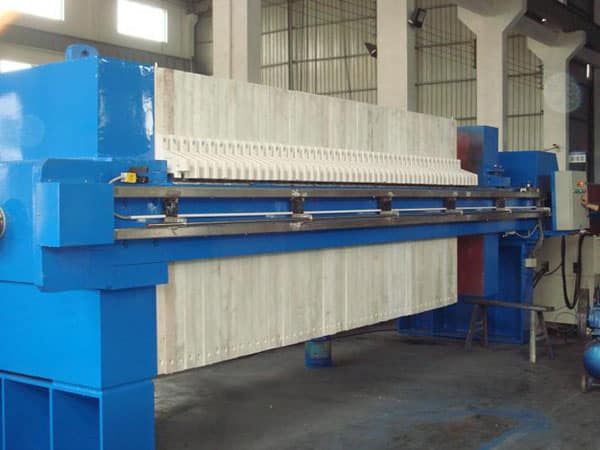
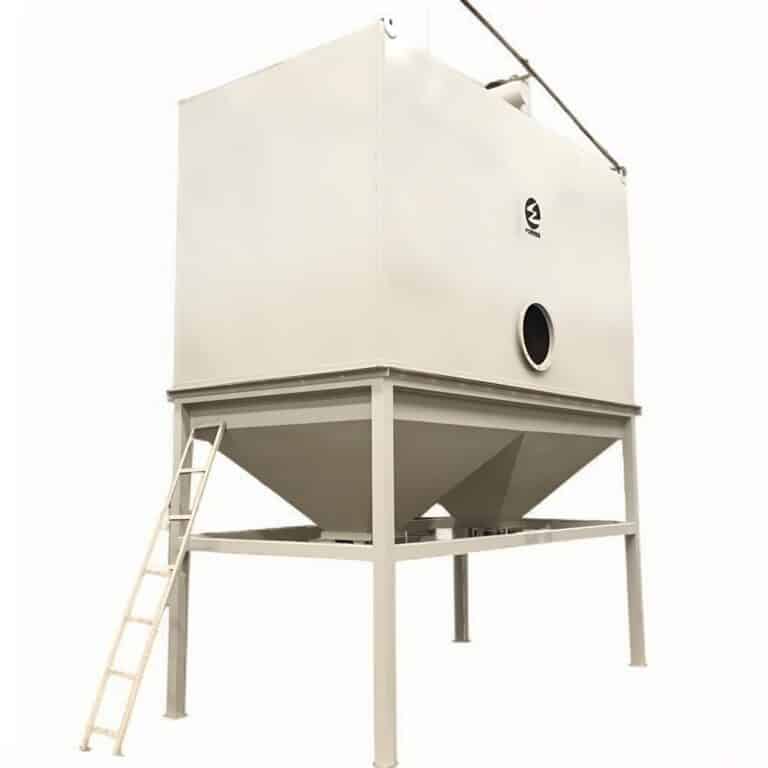
Heavy-solids factories that commission a wastewater treatment line by copying a municipal sequence — screening, then dosing, then settling — often discover the problem only after the settling tank begins to fail. By that point, abrasive grit has already worn pump impellers, coagulant demand has become erratic, and the sludge collecting at the bottom of the tank is denser and harder to handle than the dewatering equipment was designed to process. Correcting the sequence at that stage means reworking piping, resizing chemical feed systems, and potentially replacing dewatering hardware — all of which compounds the original commissioning cost. The decisions that prevent this are made before the first unit goes online, and they center on one judgment: in what order should grit removal, chemical dosing, settling, and pressing be placed relative to each other, given the actual solids character of the influent.
Why heavy-solids wastewater needs a different sequence
Municipal treatment sequences are built around a relatively homogeneous influent — mostly biological solids, moderate suspended loads, and a chemistry that responds predictably to coagulant addition. The sequence logic that works in that context does not transfer cleanly to ceramic or stone processing operations, where the influent can carry coarse mineral particles, abrasive fines, and high suspended solids concentrations that vary with production rate and material type.
The core difference is not just the total suspended solids load — it is the particle size distribution and the settling behavior that follows from it. Coarse mineral grit settles fast and accumulates in equipment dead zones. Fine ceramic dust may stay in suspension long enough to pass through primary settling and re-enter the water loop. A sequence designed for lighter influent assumes that primary settling can handle whatever arrives at that stage. In a heavy-solids line, that assumption breaks down because the settling tank ends up receiving both the fraction it was sized for and a coarse fraction it was not.
The Ceramic Manufacturing Industry BREF documents the range of solids loading conditions typical of ceramic production and notes the process complexity that follows from high mineral particle content — useful grounding for understanding why the influent characteristics of these operations demand early mechanical intervention rather than chemistry-first treatment. The practical implication is that sequencing in heavy-solids plants should be driven by particle behavior at each stage, not by the process order that happens to be familiar from lighter-duty applications.
What should be removed mechanically before chemistry starts
The first mechanical decision is not which chemical to add — it is which solids to remove before chemistry is introduced at all. In heavy-solids operations, coarse abrasives reaching the dosing stage create two separate problems: they consume coagulant that was dosed for finer particles, and they physically wear the equipment that was sized to handle a cleaner feed.
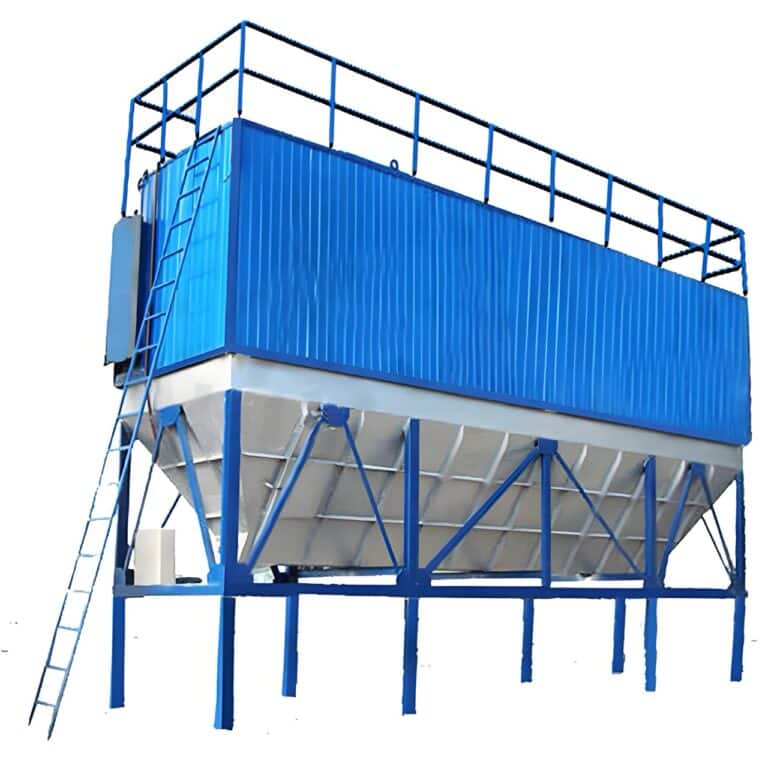
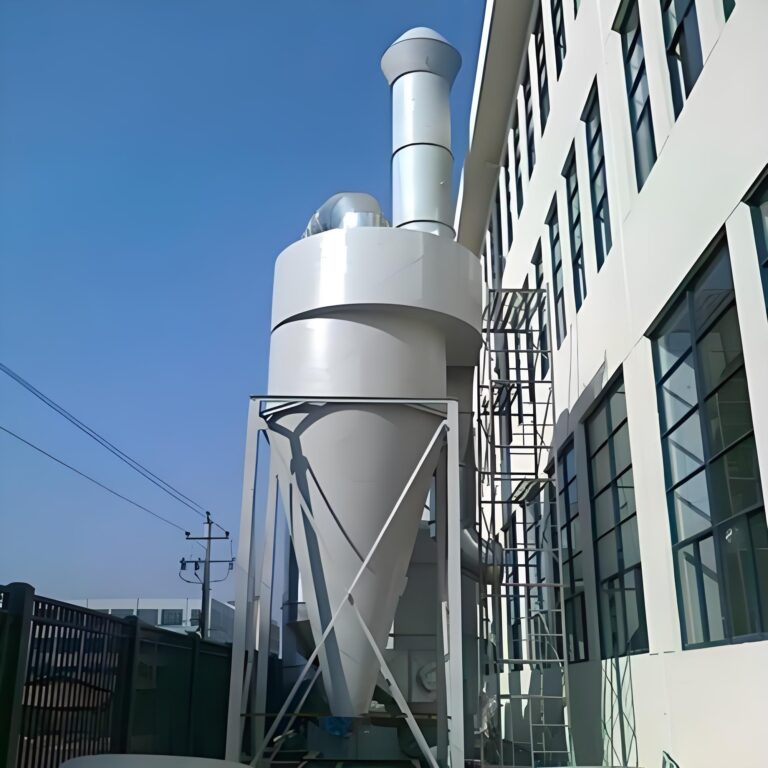
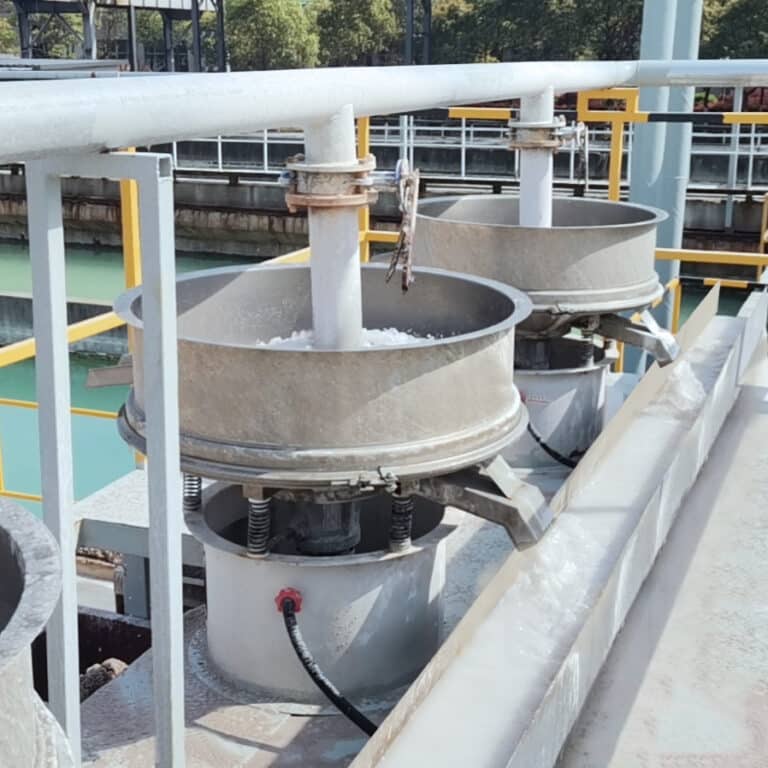
Screening protects downstream grit removal by catching oversized material that could obstruct or damage the gravity chamber. Once screened flow enters the grit removal stage, heavy mineral particles — sand, dense ceramic fines, and similar materials — separate by gravity before the water reaches primary settling. This mechanical separation is what keeps the settling stage operating within its designed capacity. Without it, the settling tank accumulates a coarse, abrasive fraction that accelerates scraper and pump wear while reducing the effective hydraulic volume available for the finer solids the tank was actually sized to treat.
| Step | What It Removes | Key Protection Provided |
|---|---|---|
| Screening | Rags, sticks, oversized solids | Protects pumps and pipelines from clogging; prevents damage to the downstream grit removal unit |
| Grit removal (gravity chamber) | Sand, coffee grounds, eggshells, other small heavy particles | Prevents abrasive wear on pipes and equipment; avoids overloading primary settling tanks; improves efficiency of subsequent treatment stages |
The distinction between these two steps matters for maintenance planning as well as process stability. Screening failures tend to show up quickly as mechanical damage or blockage. Grit removal failures are subtler — they appear as settling tank underperformance, unpredictable sludge volumes, or downstream equipment wear that accumulates gradually before it becomes a visible operational problem. For ceramic and stone operations with continuous or semi-continuous production, grit removal is not a preliminary convenience; it is the stage that determines whether the rest of the line runs within its design parameters. Equipment designed for this duty — such as systems configured specifically for large particle grit removal — accounts for the abrasive characteristics and settling velocities of mineral-heavy influent that standard units are not built to handle reliably.
How dosing and settling depend on upstream solids control
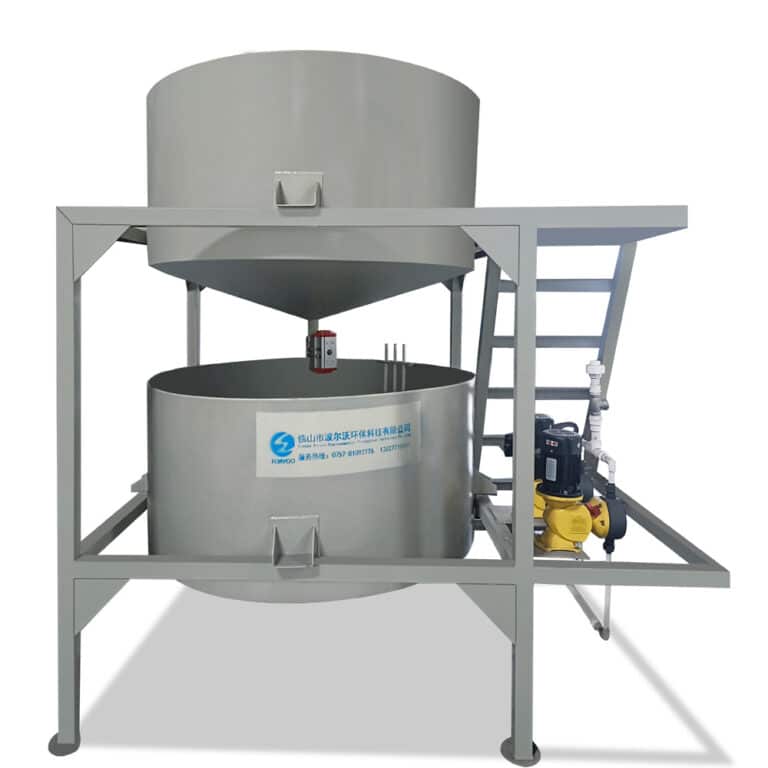
Chemical dosing in a treatment line is calibrated against an expected influent character. When grit removal is effective, the settling tank receives a manageable, relatively predictable solids load, and coagulant or flocculant dosing can be tuned to produce consistent floc formation and separation. When grit removal is absent or undersized, the solids reaching the dosing stage include a heavy mineral fraction that was never accounted for in the chemical feed design.
The consequence is not simply higher chemical consumption — though that occurs. The more damaging effect is that chemical demand becomes inconsistent. Coarse particles interact with coagulants differently than fine suspended solids do, and when the grit fraction varies with production output or raw material type, the dosing system is chasing a moving target. TSS, COD, and BOD reduction targets — which represent the design expectations for primary settling — become difficult to meet reliably because the tank is processing a load it was not sized to receive.
| Upstream Grit Removal Status | Effect on Primary Settling | Impact on Chemical Dosing & Treatment Targets |
|---|---|---|
| Insufficient or absent | Settling tanks become overloaded with heavy solids; effective hydraulic capacity drops | TSS, COD, and BOD reduction falls below design; chemical demand becomes unpredictable |
| Effective gravity-based grit removal | Settling tanks receive a manageable solids load | Chemical dosing remains stable; predictable removal rates support compliance with discharge targets |
The downstream compliance risk is real. Discharge targets are set against what the full treatment train is expected to achieve under normal operating conditions. If the upstream grit removal stage is not performing, those conditions no longer exist, and the settled effluent may not meet the concentrations assumed during design. The harder-to-see consequence is that overdosing to compensate for unpredictable influent creates a denser, less consistent sludge — one that arrives at the dewatering stage in a form that pressures the belt press or centrifuge beyond its rated conditioning range. For a closer look at how intelligent dosing systems manage feed variability in these conditions, the article on water treatment chemical dosing systems covers the control logic and sensing approaches that make adaptive dosing practical.
Where sludge buildup begins to destabilize the whole line
Sludge accumulation becomes a process-level problem before it becomes a visible equipment problem. The destabilization pathway typically begins when withdrawal from the settling tank cannot keep pace with the rate at which solids are arriving — a condition that develops gradually and is often misread as a chemistry or dosing issue rather than a throughput and sequencing issue.
Once sludge volume in the settling tank exceeds the withdrawal rate, blanket depth rises. As the sludge blanket approaches the overflow zone, fine particles that should settle begin to carry over into downstream stages or back into the recirculation loop. What the line starts receiving at the front is no longer just fresh influent — it includes concentrated solids that have already passed through part of the treatment process and returned without being fully removed. Each recirculation cycle compounds the loading problem, and the chemical demand that was already difficult to control becomes harder still.
The points where accumulation tends to begin are between the primary settling tank and the sludge holding or thickening stage, and between thickening and pressing. If sludge is held too long at either point — because pressing capacity is insufficient, scheduled maintenance has interrupted withdrawal, or production surges have delivered more solids than the downstream dewatering stage can process — the accumulated volume creates a feedback condition that takes time to clear even after normal withdrawal resumes. This is the failure pattern that most consistently surprises operators who come from lighter-duty applications: the system appears to be running, but the recirculating solids load is silently building until a visible symptom — overflowing tanks, deteriorating effluent quality, or dewatering equipment that cannot maintain cake dryness — makes the problem undeniable.
The practical review check is whether sludge withdrawal scheduling is tied to production rate rather than fixed clock intervals. Fixed-interval withdrawal works when influent load is consistent; in ceramic and stone operations where batch processing or shift-based production creates surge periods, withdrawal intervals that lag behind production surges create exactly the accumulation conditions described above.
How pressing should be timed to protect recycle stability
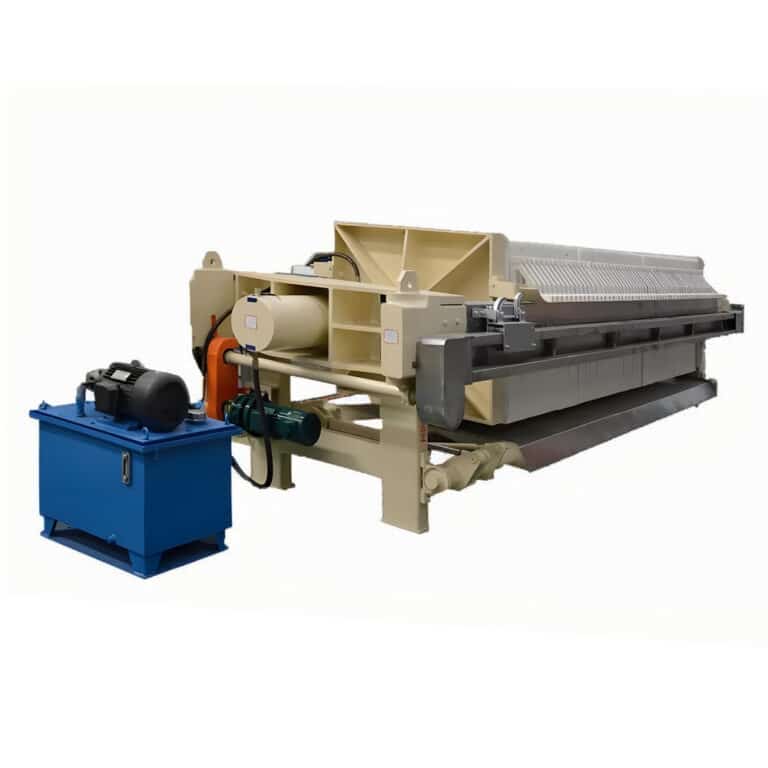
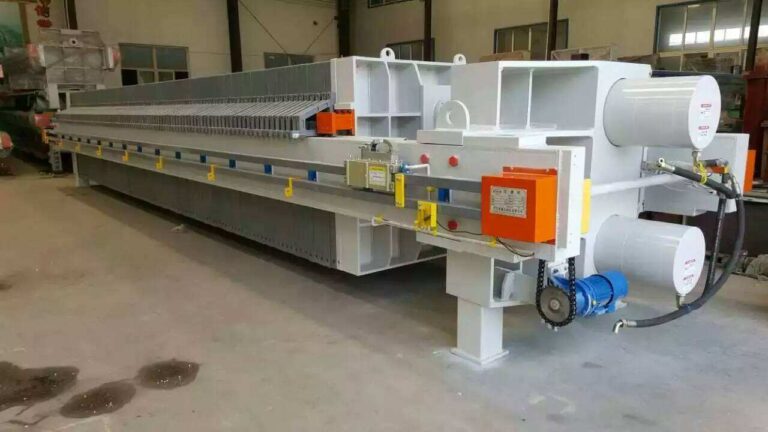
Pressing is typically the last point at which solids leave the water loop, and the timing of pressing operations directly affects the quality of filtrate or recycle water returning to earlier stages in the line. When pressing is delayed relative to the rate at which sludge is being conditioned and fed, filtrate volume backs up and the conditioned sludge that was dosed for a specific pressing window begins to break down — producing a wetter, less uniform feed that the belt press or filter press cannot dewater to the cake dryness the disposal or reuse pathway requires.
The trade-off in timing is between pressing throughput and recycle water quality. Running the press continuously at low feed consistency produces a wetter cake and a filtrate that may carry more suspended solids than the recirculation system was designed to handle. Holding conditioned sludge to batch a denser feed improves cake quality but introduces a holding window during which the conditioning chemistry — typically polymer addition — continues to act on the sludge, potentially changing its dewatering characteristics before it reaches the press.
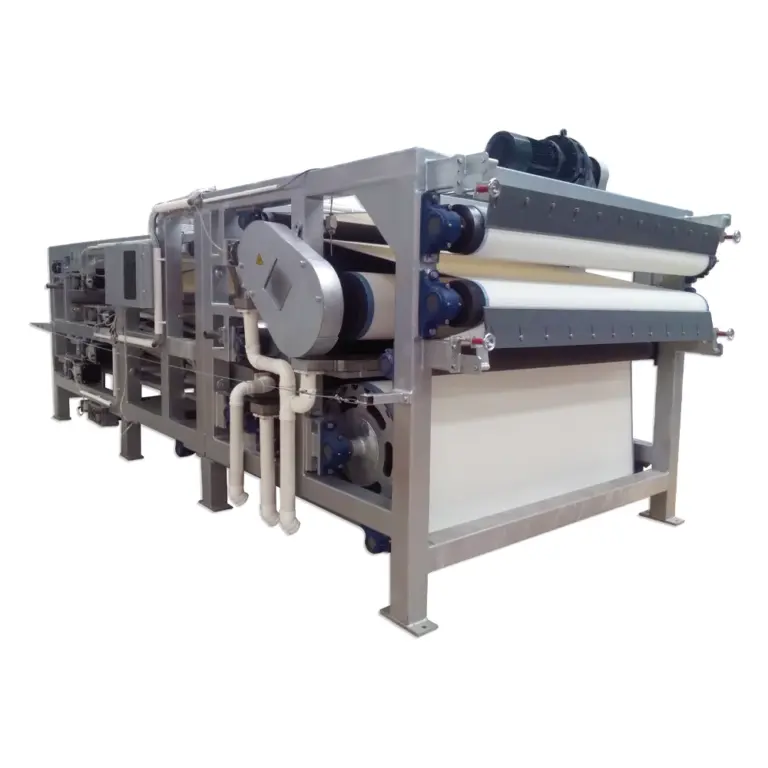
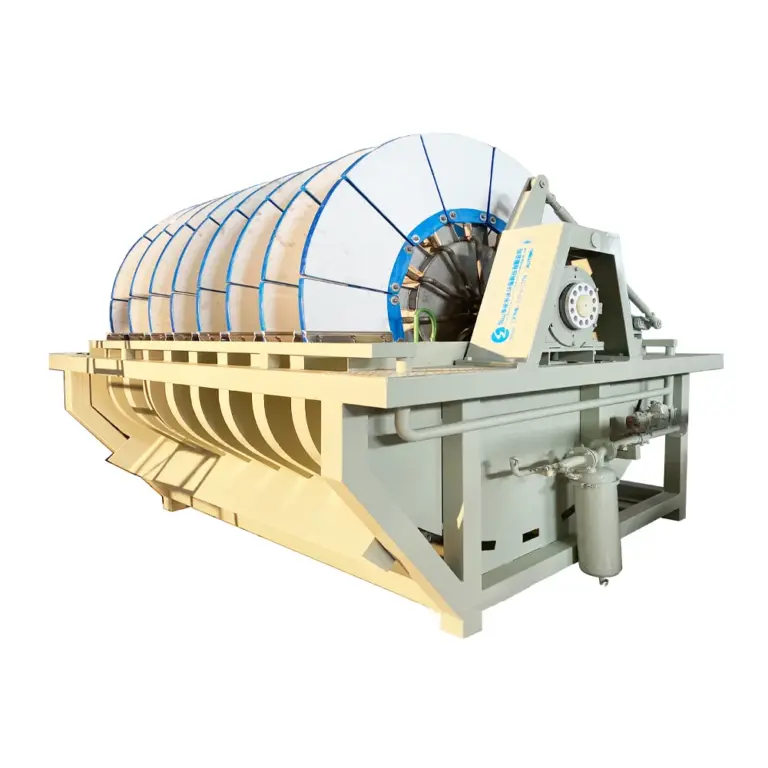
For ceramic and stone operations, where the sludge fraction includes both dense mineral particles from grit carry-over and finer colloidal material from primary settling, the pressing feed is rarely uniform across a production shift. Sampling and characterizing the sludge feed before pressing — consistent with the sludge sampling protocols established in ISO 5667-13:2011, which provides a testing framework for representative sludge sampling — allows operators to adjust polymer dose and belt speed relative to actual feed condition rather than nominal design assumptions. The practical implication is that pressing timing should be treated as a variable in process control, not a fixed schedule, and that recycle water quality should be monitored as a downstream indicator of whether the pressing stage is absorbing or amplifying variability from earlier in the line.
Which sequence best fits ceramic and stone wastewater
For ceramic and stone processing operations, the sequence that tends to support stable long-term operation positions mechanical solids removal ahead of every chemistry-dependent stage, and positions dewatering to minimize the time between sludge conditioning and solids discharge from the water loop.
A practical sequence for this application runs as follows: coarse screening removes oversized material that would obstruct or damage the grit removal stage; a gravity-based grit chamber separates dense mineral particles before they reach the settling tank; primary settling receives a solids load that is manageable and relatively predictable; chemical dosing — coagulant and flocculant — operates against a settled or screened feed rather than a raw grit-laden influent; thickening concentrates the settled sludge before it reaches the pressing stage; and pressing discharges dewatered cake on a schedule that is tied to conditioning and feed consistency rather than fixed intervals.
The Ceramic Manufacturing Industry BREF provides process-reference support for understanding the solids loading characteristics of ceramic operations and the role of early-stage solids control in managing downstream treatment complexity. The EPA Mineral Mining and Processing Effluent Guidelines offer compliance-safety context for discharge targets that the settled and treated effluent is expected to meet — relevant when designing the settling and polishing stages to confirm that the sequence as built will support the effluent quality required. These two references address different aspects of the design decision: one informs process sequencing logic, the other informs the discharge performance targets the sequence must achieve.
The sequence error that most frequently requires costly rework is placing chemical dosing before mechanical separation is complete. In ceramic and stone operations, coagulants and flocculants introduced to a grit-bearing influent are wasted on a fraction that gravity separation would have removed for a fraction of the chemical cost. More consequentially, the grit that passes through dosing carries into the settling tank and from there into the sludge, where it produces a cake with higher mineral content, lower compressibility, and greater abrasive wear on pressing belts and rollers than a properly pre-separated sludge would generate. For operations evaluating pressing equipment for mineral-heavy sludge, understanding the conditioning and belt life implications is worth reviewing in detail — the practical considerations around sludge dewatering and belt press selection are covered in the 2025 guide to sludge dewatering methods and belt presses.
The sequence decisions made during design or early commissioning are the hardest to reverse later, because each unit in the line is sized and specified against assumptions about what the upstream stages will deliver. If grit removal is undersized, the settling tank is implicitly oversized for what it actually receives — or undersized for the grit-laden load that arrives instead. If pressing is treated as a fixed-interval operation rather than a variable tied to feed condition and recycle water quality, the recirculation loop will periodically return a concentrated solids load that the front of the line was never designed to absorb on top of fresh influent.
Before finalizing sequence design — or before auditing an existing line that is underperforming — the most useful question is not which unit is failing, but whether the solids that each unit is receiving match the solids it was designed to treat. In ceramic and stone operations, the answer to that question usually points back to the same decision point: whether mechanical separation was completed before chemistry was introduced, and whether sludge withdrawal was designed to pace production rather than to run on a fixed schedule independent of the load.
Frequently Asked Questions
Q: Does this sequencing approach still apply if the plant runs batch production rather than continuous flow?
A: Yes, but sludge withdrawal scheduling becomes more critical, not less. Batch operations create surge periods where solids loading can spike sharply between production cycles. Fixed-interval withdrawal — which may be acceptable during steady continuous flow — will consistently lag behind those surges, allowing sludge blanket depth to rise in the settling tank and triggering the recirculation feedback the sequence is designed to prevent. Withdrawal timing must be tied to production schedule, and the grit removal and settling stages should be evaluated for their surge handling capacity, not just their steady-state design throughput.
Q: After commissioning the correct sequence, what should operators monitor first to confirm the line is actually stable?
A: Recycle water quality at the pressing stage is the most reliable early indicator. If the filtrate returning from pressing carries elevated suspended solids, it signals that either pressing timing is off, conditioning chemistry has shifted, or solids are carrying over from the settling tank into the sludge feed. Catching this signal early — before it compounds loading at the front of the line — is faster and less costly than diagnosing the problem after effluent quality at discharge has already deteriorated.
Q: At what point does a lighter industrial influent — one with lower mineral content than ceramic or stone operations — still justify early mechanical separation over a chemistry-first sequence?
A: The threshold is not mineral content alone but whether particle settling behavior in the influent is predictable enough for coagulant dosing to be calibrated reliably. If suspended solids concentration varies significantly with production rate or raw material type, or if any portion of the solids fraction settles faster than the primary settling tank was designed for, early mechanical separation will stabilize dosing regardless of whether the operation qualifies as heavy-solids by total load. Chemistry-first sequences tend to remain viable only when the influent is genuinely uniform and the coarse fraction is negligible.
Q: How does the cost of early grit removal equipment compare to the cost of correcting a sequence that skipped it?
A: Grit removal installed at design is significantly less expensive than correcting its absence after commissioning. Rework at that stage typically involves repiping to insert the missing unit, resizing the chemical feed system that was calibrated for a cleaner-than-actual feed, and potentially replacing dewatering hardware that has been processing a more abrasive sludge than its belts or rollers were rated for. The article notes that these corrections compound the original commissioning cost — meaning the economic case for early mechanical separation is strongest before any other unit goes online, not after a visible failure has forced the issue.
Q: Can a belt press handle the mineral-heavy sludge produced in ceramic operations without special conditioning, or is polymer addition always necessary?
A: Polymer addition is practically always necessary for ceramic sludge, but the required dose and type are highly sensitive to what arrives at the pressing stage. Sludge that contains significant grit carry-over from inadequate upstream separation has lower compressibility and behaves differently under belt pressure than a properly pre-separated sludge would. Without characterizing the actual feed — including its mineral fraction and moisture content — before selecting polymer type and dose, operators risk conditioning the sludge for a cake consistency the press cannot reliably achieve, which shortens belt life and produces wetter cake than the disposal or reuse pathway requires.
Related Contents:
- Grit Chamber Sizing for Optimal Performance
- Grit Removal Impact on Secondary Treatment Processes
- Top Components of Vertical Sedimentation Towers Explained
- Industrial Wastewater Recycling: Cutting-Edge Solutions
- 6 Types of Sedimentation Processes in Water Treatment
- Wastewater Clarifiers: Types and Applications Guide