Dalam pemrosesan logam, batu, dan komposit, menangkap debu berbahaya pada sumbernya merupakan persyaratan keselamatan dan kepatuhan yang tidak dapat ditawar. Namun, memilih meja gerinda downdraft sering kali berpusat pada harga dan aliran udara, mengabaikan keputusan teknik penting yang menentukan keselamatan jangka panjang dan biaya operasional. Kesalahpahaman yang umum terjadi adalah bahwa semua sistem memiliki kinerja yang sama, yang mengarah pada peralatan dengan spesifikasi yang kurang tepat yang gagal dalam kondisi dunia nyata.
Pertaruhannya lebih tinggi pada tahun 2025. Penegakan peraturan standar seperti NFPA 652 untuk debu yang mudah terbakar dan peraturan silika OSHA menuntut solusi kontrol yang tepat dan terdokumentasi. Selain kepatuhan, efisiensi operasional dan total biaya kepemilikan merupakan faktor penentu belanja modal. Panduan ini memberikan kerangka kerja teknis untuk menyesuaikan rekayasa sistem dengan kebutuhan material, proses, dan fasilitas spesifik Anda.
Cara Kerja Meja Gerinda Downdraft: Prinsip-prinsip Inti
Mekanisme Penangkapan Downdraft
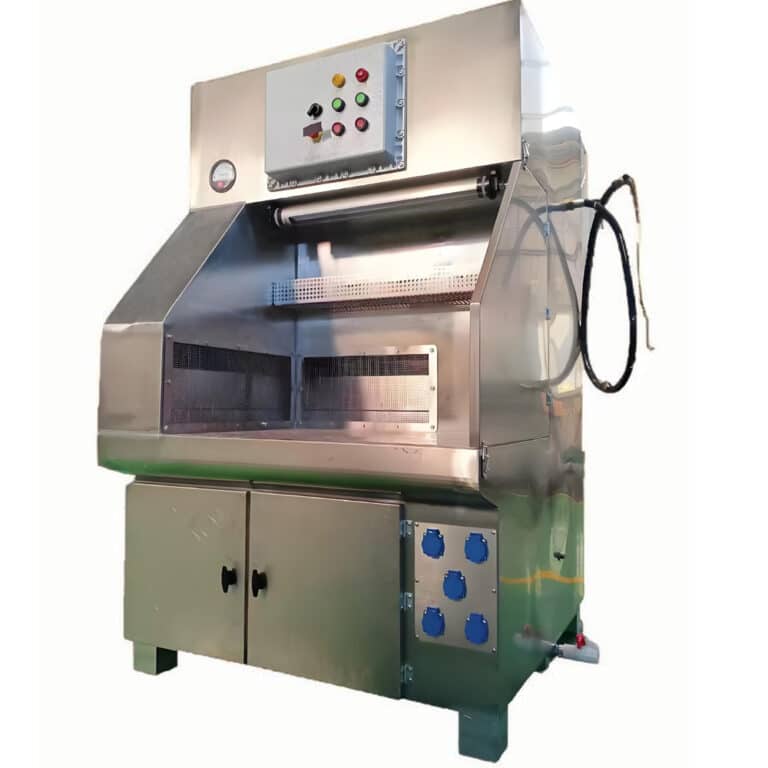
Meja downdraft berfungsi sebagai stasiun kerja ventilasi mandiri. Sistem kipas menciptakan tekanan negatif di bawah permukaan kerja yang berlubang, menghasilkan aliran udara ke bawah yang konsisten. Aliran udara ke bawah ini menarik kontaminan dari zona pernapasan operator dan masuk ke dalam sistem penyaringan terintegrasi. Tantangan rekayasa inti adalah mempertahankan kecepatan penangkapan yang cukup di seluruh permukaan meja untuk mengatasi gumpalan termal dari benda kerja yang panas dan aliran udara silang fasilitas. Aliran udara yang tidak mencukupi membuat sistem menjadi tidak efektif, sehingga memungkinkan partikulat berbahaya keluar.
Aliran Udara Lanjutan: Peran Aliran Balik (Backdraft)
Untuk proses di mana benda kerja memanjang di atas permukaan meja-seperti mengelas rakitan tinggi atau deburring coran besar-aliran udara downdraft standar tidak cukup. Kontaminan naik secara vertikal dan lolos dari tangkapan. Desain yang lebih canggih menggunakan panel aliran balik berventilasi. Desain “DualDraw” atau down-and-backdraft yang telah dipatenkan ini menambahkan komponen aliran udara ke arah belakang. Efek gabungan ini menciptakan selubung tangkapan tiga dimensi yang sangat penting untuk menahan asap dan debu halus yang naik. Dalam evaluasi kami, nuansa rekayasa ini memisahkan solusi khusus aplikasi berkinerja tinggi dari unit komoditas dasar. Efisiensi penangkapan adalah fungsi dari desain aliran udara yang cerdas, bukan sekadar daya isap mentah.
Konfigurasi Sistem: Bertenaga vs Tersalurkan
Pilihan pemasangan yang mendasar adalah antara unit bertenaga (mandiri) dan meja yang tidak bertenaga (disalurkan). Unit bertenaga memiliki kipas dan sistem penyaringan, mensirkulasi ulang udara yang telah dibersihkan kembali ke ruang kerja. Mereka menawarkan fleksibilitas plug-and-play. Meja yang tidak bertenaga berfungsi sebagai tudung penangkap sumber, disalurkan ke pengumpul debu pusat. Keputusan ini berdampak pada tata letak fasilitas, kebutuhan listrik, dan pemeliharaan saluran jangka panjang. Memilih konfigurasi yang salah akan menciptakan kerumitan instalasi yang tidak perlu dan kemacetan operasional yang berkelanjutan.
Sistem Downdraft Kering vs Basah: Perbedaan Utama
Metode Filtrasi Menentukan Aplikasi
Perbedaan utama antara jenis sistem adalah media filtrasi, yang secara langsung menentukan aplikasi yang aman. Sistem filtrasi kering menggunakan media fisik seperti filter kartrid berlipit atau filter HEPA. Mereka adalah konfigurasi yang paling umum untuk penangkapan partikulat umum dari bahan seperti baja, plastik, dan kayu. Sistem scrubber basah menggunakan penangas air untuk menangkap dan menetralkan bahan berbahaya. Aplikasi intinya adalah untuk debu yang mudah terbakar dari logam seperti aluminium, magnesium, atau titanium, di mana air menekan sumber penyalaan potensial. Percabangan ini mutlak; memilih sistem kering untuk aplikasi debu yang mudah terbakar merupakan kegagalan keselamatan yang kritis.
Implikasi Operasional dan Pemeliharaan
Metode penyaringan mendorong semua pertimbangan operasional hilir. Sistem kering dengan mekanisme pembersihan sendiri menggunakan udara berdenyut untuk mengeluarkan debu ke dalam tempat penampungan, sehingga meminimalkan tenaga kerja manual. Sistem basah memerlukan manajemen kualitas air yang konsisten, perawatan kimia untuk mencegah pertumbuhan biologis, dan pembuangan lumpur terjadwal. Bahan konstruksinya juga berbeda: sistem kering sering kali menggunakan baja berlapis bubuk, sedangkan scrubber basah biasanya dibuat dari baja tahan karat untuk ketahanan terhadap korosi. Pilihan antara kering dan basah ini adalah keputusan pertama dan paling penting dalam proses pemilihan.
Tabel berikut ini menguraikan perbedaan operasional mendasar antara kedua jenis sistem ini.
Sistem Downdraft Kering vs Basah: Perbedaan Utama
| Fitur | Sistem Filtrasi Kering | Sistem Scrubber Basah |
|---|---|---|
| Metode Filtrasi Primer | Kartrid/filter HEPA | Mandi air |
| Konstruksi Khas | Baja berlapis bubuk | Baja tahan karat |
| Aplikasi Keamanan Inti | Penangkapan partikulat secara umum | Penekanan debu yang mudah terbakar |
| Jenis Perawatan | Penggantian filter / denyut | Pengelolaan air & lumpur |
| Tenaga Kerja Operasional | Rendah (jika membersihkan sendiri) | Lebih tinggi, konsisten |
Sumber: NFPA 652. Standar ini mengamanatkan analisis dan pengendalian bahaya untuk debu yang mudah terbakar, yang secara langsung menginformasikan kebutuhan kritis akan sistem scrubber basah saat memproses material seperti aluminium atau titanium untuk mencegah kebakaran dan ledakan.
Spesifikasi Teknis Penting untuk Kinerja Optimal
Menyesuaikan Aliran Udara dan Penyaringan dengan Proses
Memilih sistem memerlukan kecocokan kemampuan teknisnya dengan proses spesifik Anda. Aliran udara, yang diukur dalam CFM, adalah metrik kinerja utama. Ini berkisar dari 700 CFM untuk unit benchtop hingga lebih dari 6.000 CFM untuk meja industri besar. CFM yang cukup mempertahankan kecepatan penangkapan yang diperlukan. Efisiensi penyaringan ditentukan oleh media filter. Kartrid standar 200 mikron cukup untuk debu abrasif berat, sementara filter HEPA yang menangkap 99,97% partikel pada 0,3 mikron wajib untuk silika atau debu komposit halus. Kedua parameter ini-CFM dan efisiensi filter-saling bergantung dan harus ditentukan bersama.
Spesifikasi Konstruksi dan Daya Tahan
Dimensi permukaan kerja dan kapasitas beban harus mengakomodasi benda kerja yang paling besar dan paling berat. Bahan konstruksi bukanlah pilihan kosmetik. Baja berlapis bubuk cocok untuk fabrikasi umum, sedangkan baja tahan karat 316 diperlukan untuk sistem basah, lingkungan korosif, atau aplikasi ruang bersih yang ketat. Siklus kerja motor kipas dan kemampuan tekanan statis juga sangat penting; memproses batu atau menggunakan filter HEPA menciptakan resistensi sistem yang tinggi yang tidak dapat diatasi oleh kipas standar. Parameter ini menjadi dasar untuk analisis total biaya kepemilikan.
Tabel di bawah ini merinci parameter teknis utama yang harus dievaluasi selama spesifikasi.
Spesifikasi Teknis Penting untuk Kinerja Optimal
| Parameter | Kisaran Khas | Pertimbangan Utama |
|---|---|---|
| Aliran udara (CFM) | 700 - 6.000+ CFM | Mempertahankan kecepatan penangkapan |
| Efisiensi Filtrasi | 200 mikron hingga HEPA | Ukuran partikel menentukan kebutuhan |
| Media Filter | Kartrid standar ke HEPA | Untuk silika, komposit halus |
| Bahan Konstruksi | Baja berlapis hingga 316 Stainless | Mencocokkan lingkungan proses |
| Kapasitas Beban | Bervariasi menurut model | Mengakomodasi berat benda kerja |
Sumber: ANSI/ASHRAE 52.2. Standar ini mendefinisikan metode pengujian untuk efisiensi penghilangan filter udara berdasarkan ukuran partikel, yang memberikan dasar untuk mengevaluasi dan menentukan efisiensi penyaringan (mis., HEPA) sistem meja downdraft.
Memilih Sistem yang Tepat untuk Logam, Batu & Komposit
Persyaratan Pengolahan Logam
Untuk menggiling, mengikis, atau memoles logam, sistem memerlukan filter kartrid yang tahan lama dan tahan terhadap partikulat abrasif. Konstruksi tahan percikan api, termasuk perangkap percikan api sebelum saluran masuk filter, sangat penting untuk logam besi untuk mencegah kebakaran filter. Saat memproses baja tahan karat atau paduan yang menghasilkan kromium heksavalen, filter lanjutan HEPA sering kali diperlukan untuk memenuhi batas paparan yang diizinkan. Sistem harus direkayasa untuk menangani kepadatan dan tingkat abrasivitas tertentu dari debu logam yang dihasilkan.
Permintaan Batu, Beton, dan Komposit
Pekerjaan batu dan beton menghasilkan debu silika kristal yang berat. Hal ini mengharuskan kipas bertekanan statis tinggi untuk menarik debu melalui pemisah utama dan filter akhir HEPA wajib untuk memenuhi peraturan. Pemrosesan material komposit, seperti serat karbon atau fiberglass, menghasilkan debu halus dan berbahaya yang dapat menembus filter standar. Aplikasi ini memerlukan filtrasi kartrid efisiensi tinggi dan mungkin tahap karbon aktif terintegrasi untuk kontrol VOC dari resin. Kebutuhan akan penyesuaian ini menunjukkan adanya perpecahan pasar antara solusi yang dapat dikonfigurasi, solusi yang direkayasa untuk aplikasi, dan unit standar.
Tabel berikut ini merangkum persyaratan sistem yang didorong oleh jenis material.
Memilih Sistem yang Tepat untuk Logam, Batu & Komposit
| Jenis Bahan | Persyaratan Sistem Utama | Kebutuhan Filtrasi Khas |
|---|---|---|
| Pengolahan Logam | Konstruksi tahan percikan api | Filter kartrid yang tahan lama |
| Batu / Beton | Kipas tekanan statis tinggi | Filter akhir HEPA |
| Material Komposit | Kemungkinan kontrol VOC | Kartrid efisiensi tinggi |
| Logam Mudah Terbakar | Desain tahan ledakan | Sistem scrubber basah |
Sumber: ISO 15012-4: 2016. Standar ini memberikan persyaratan umum untuk peralatan yang menangkap asap berbahaya dari proses terkait seperti penggilingan, yang menginformasikan fitur keselamatan dan kinerja yang diperlukan untuk berbagai bahan.
Meja Scrubber Basah untuk Debu yang Mudah Terbakar & Berbahaya
Direkayasa untuk Mitigasi Risiko
Meja scrubber downdraft basah bukanlah sebuah varian, melainkan sebuah kontrol rekayasa yang dibuat khusus untuk skenario berisiko tinggi tertentu. Meja ini dirancang untuk menghadapi kebakaran, ledakan, atau risiko paparan racun yang signifikan. Sistem ini menarik udara yang terkontaminasi melalui pelat berlubang ke dalam reservoir air, tempat partikulat dibasahi, ditangkap, dan dinetralkan. Proses ini menghilangkan awan debu dan menekan energi penyalaan. Kepatuhan terhadap standar NFPA adalah wajib, yang melibatkan fitur-fitur seperti komponen listrik Kelas II, Divisi 1, konstruksi anti-ledakan, dan komponen yang diikat/dibumikan.
Pentingnya Pemilihan Vendor
Untuk aplikasi ini, memilih vendor dengan teknik yang telah terbukti, teruji, dan data efisiensi pengumpulan yang tervalidasi merupakan strategi mitigasi risiko yang tidak dapat dinegosiasikan. Tidak semua “meja basah” memiliki sertifikasi yang sama atau efektif. Dokumentasi kepatuhan terhadap standar yang relevan, bersama dengan data pengujian kinerja pihak ketiga, sangatlah penting. Memilih alternatif generik berdasarkan harga saja akan menimbulkan tanggung jawab yang tidak dapat diterima. Rekayasa di balik sertifikasi meja downdraft scrubber basah industri harus divalidasi untuk bahaya tertentu.
Pertimbangan Instalasi, Ruang & Operasional
Faktor Bentuk dan Integrasi Alur Kerja
Desain fisik meja secara langsung berdampak pada efisiensi produksi. Meja dengan permukaan datar menawarkan akses 360 derajat, ideal untuk penggerindaan komponen kecil secara manual. Unit dengan kastor tugas berat memberikan mobilitas untuk tata letak toko yang fleksibel. Desain dengan bagian belakang berventilasi terintegrasi atau tirai samping yang dapat disesuaikan sangat penting untuk menangkap emisi dari pekerjaan vertikal pada fabrikasi besar. Pilihan ini merupakan keputusan tata letak dan desain proses serta keputusan keselamatan. Rencana fasilitas harus memperhitungkan tapak unit, jarak bebas untuk penanganan material, dan akses untuk pemeliharaan.
Persyaratan Utilitas Fasilitas
Logistik instalasi melampaui ruang lantai. Unit bertenaga memerlukan layanan listrik yang sesuai, sering kali tiga fase untuk model yang lebih besar. Sistem basah membutuhkan akses ke pasokan air dan saluran pembuangan atau bak penampungan untuk pembuangan lumpur. Meja yang disalurkan (tidak bertenaga) membutuhkan koneksi ke kolektor pusat dengan kapasitas yang memadai; sistem pusat yang berukuran kecil akan mengganggu kinerja semua sungkup yang terhubung. Mengabaikan persyaratan utilitas ini selama perencanaan akan menyebabkan pesanan perubahan yang mahal dan penundaan commissioning.
Perawatan Berkelanjutan, Masa Pakai Filter & Total Biaya Kepemilikan
Biaya Sebenarnya dari Protokol Pemeliharaan
Pemeliharaan merupakan hal yang penting untuk kinerja dan keselamatan yang berkelanjutan, bukan hanya sebagai pelengkap. Sistem kering memerlukan pemeriksaan, pembersihan, dan penggantian filter secara teratur. Desain pembersihan mandiri dengan pembersihan pulse-jet otomatis mengotomatiskan tugas ini, yang mewakili pertukaran ekonomi operasional yang jelas: pengeluaran modal yang lebih tinggi untuk tenaga kerja yang jauh lebih rendah dan biaya waktu henti. Sistem basah memerlukan pemantauan pH air, padatan terlarut, dan pembuangan lumpur terjadwal secara konsisten. Mengabaikan protokol ini menyebabkan penurunan kinerja yang cepat, peningkatan konsumsi energi, dan potensi kegagalan sistem.
Menghitung Total Biaya Kepemilikan (TCO)
Keputusan pembelian yang hanya didasarkan pada harga awal adalah keputusan yang salah. Analisis TCO yang tepat membandingkan sistem selama periode 3-5 tahun, termasuk biaya siklus hidup filter, konsumsi energi, perkiraan tenaga kerja untuk pemeliharaan, dan potensi waktu henti produksi untuk penggantian atau perbaikan filter. Sistem yang lebih mahal dengan pembersihan otomatis dan masa pakai filter yang lebih lama sering kali menghasilkan TCO yang lebih rendah dalam aplikasi multi-pemakaian dan multi-shift. Pandangan komprehensif ini sangat penting untuk menjustifikasi investasi modal.
Tabel di bawah ini membandingkan komponen biaya dari berbagai jenis sistem kering, dengan menyoroti pertukaran capex/opex.
Perawatan Berkelanjutan, Masa Pakai Filter & Total Biaya Kepemilikan
| Komponen Biaya | Sistem Kering (Standar) | Sistem Kering (Membersihkan Sendiri) |
|---|---|---|
| Modal Awal (Capex) | Lebih rendah | Lebih tinggi |
| Biaya Siklus Hidup Filter | Lebih tinggi (manual) | Lebih rendah (otomatis) |
| Tenaga Kerja & Waktu Henti | Lebih tinggi | Minimal |
| Konsumsi Energi | Bervariasi menurut CFM | Bervariasi menurut CFM |
| Pembuangan/Pengelolaan | Debu yang terkumpul | Lumpur air |
Catatan: Sistem basah menambah biaya untuk pasokan air, pengolahan, dan pembuangan lumpur.
Sumber: Dokumentasi teknis dan spesifikasi industri.
Kerangka Kerja Langkah-demi-Langkah untuk Pemilihan 2025 Anda
Langkah 1: Analisis Bahaya dan Proses
Mulailah dengan analisis bahaya menyeluruh terhadap bahan proses Anda. Tentukan tingkat mudah terbakar (sesuai NFPA 652), toksisitas (OSHA PEL), dan distribusi ukuran partikel. Hal ini menentukan persyaratan keselamatan yang tidak dapat dinegosiasikan: kering vs basah, efisiensi penyaringan, dan konstruksi. Secara bersamaan, menganalisis geometri benda kerja, alur kerja operator, dan volume produksi. Hal ini menginformasikan ukuran meja yang diperlukan, faktor bentuk, dan desain aliran udara (downdraft sederhana vs. down/backdraft).
Langkah 2: Spesifikasi dan Evaluasi Vendor
Hitung spesifikasi teknis yang diperlukan (CFM, ukuran permukaan, jenis filter) berdasarkan langkah pertama. Kemudian, evaluasi vendor berdasarkan sistem yang lengkap. Teliti dukungan teknik aplikasi, dokumentasi kepatuhan, dan ketersediaan filter mereka. Minta proyeksi TCO dari setiap vendor yang memenuhi syarat. Terakhir, validasi klaim kinerja melalui kunjungan lapangan atau referensi pelanggan dalam aplikasi serupa. Proses terstruktur ini memitigasi risiko dan memastikan solusi yang dipilih melindungi kesehatan, memastikan kepatuhan, dan memberikan nilai operasional.
Proses pemilihan Anda harus menyeimbangkan kebutuhan keselamatan segera dengan keekonomisan operasional jangka panjang. Meja downdraft yang benar adalah aset modal yang melindungi tenaga kerja Anda, memastikan kepatuhan terhadap peraturan, dan mendukung produksi yang efisien selama bertahun-tahun. Sistem yang salah diterapkan akan menjadi biaya yang berulang dan menjadi tanggung jawab keselamatan. Perlu penilaian profesional untuk aplikasi pemrosesan logam, batu, atau komposit Anda? Tim teknik di PORVOO dapat memberikan spesifikasi sistem dan analisis TCO berdasarkan parameter proses spesifik Anda. Hubungi Kami untuk mendiskusikan kebutuhan Anda.
Pertanyaan yang Sering Diajukan
T: Bagaimana kita menentukan apakah kita memerlukan meja scrubber basah dibandingkan dengan sistem penyaringan kering standar?
J: Keputusan bergantung pada sifat mudah terbakar dan toksisitas material Anda. Scrubber basah, biasanya baja tahan karat, menggunakan penangas air untuk menetralkan dan menekan risiko penyalaan dari logam seperti aluminium atau titanium, sehingga wajib digunakan untuk debu yang mudah terbakar. Sistem kering dengan filter kartrid untuk partikulat umum. Ini berarti fasilitas yang memproses bahan yang diklasifikasikan di bawah NFPA 652 harus memprioritaskan sistem basah sebagai strategi mitigasi risiko yang tidak dapat ditawar.
T: Apa spesifikasi aliran udara yang penting untuk memastikan penangkapan debu yang efektif pada meja downdraft?
J: Anda harus menyesuaikan aliran udara sistem, yang diukur dalam CFM, dengan permukaan dan proses kerja Anda. Unit industri berkisar antara 700 hingga lebih dari 6.000 CFM untuk mempertahankan kecepatan tangkapan yang memadai di seluruh meja, mengatasi kenaikan panas dari benda kerja yang panas. CFM yang tidak memadai memungkinkan kontaminan keluar dari zona pernapasan operator. Untuk proyek yang melibatkan komponen besar atau panas tinggi, diharapkan membutuhkan model CFM tinggi dengan panel aliran balik berventilasi untuk penangkapan yang lengkap.
T: Standar teknis apa yang berlaku untuk kinerja dan keamanan meja gerinda downdraft?
J: Sementara khusus untuk pengelasan, ISO 15012-4: 2016 menyediakan kerangka kerja keselamatan dan kinerja umum untuk peralatan ventilasi gas buang lokal yang digunakan untuk proses yang terkait seperti penggilingan. Untuk pengujian efisiensi penyaringan, metode ANSI/ASHRAE 52.2 Standar ini mendefinisikan sistem peringkat MERV yang sangat penting untuk memilih filter. Jika operasi Anda memerlukan kepatuhan terhadap silika atau komposit halus, rencanakan sistem yang filter HEPA-nya telah diuji dengan standar efisiensi ukuran partikel yang ketat ini.
T: Bagaimana pilihan antara meja bertenaga dan tidak bertenaga (disalurkan) memengaruhi perencanaan fasilitas?
J: Unit mandiri bertenaga menawarkan pemasangan plug-and-play dan resirkulasi udara bersih, yang hanya membutuhkan layanan listrik. Meja yang tidak bertenaga menyalurkan kontaminan ke pengumpul pusat, membutuhkan pekerjaan saluran yang luas dan mengandalkan kapasitas cadangan sistem tersebut. Pilihan ini secara langsung berdampak pada fleksibilitas alur kerja dan biaya infrastruktur di muka. Untuk fasilitas dengan kapasitas sistem pusat yang terbatas atau tata letak yang sering berubah, Anda harus memprioritaskan fleksibilitas operasional meja downdraft bertenaga.
T: Faktor-faktor apa saja yang harus kami sertakan dalam analisis biaya kepemilikan total untuk tabel downdraft?
J: TCO yang sebenarnya jauh melampaui harga pembelian hingga mencakup siklus penggantian filter, konsumsi energi, tenaga kerja untuk pemeliharaan, dan potensi waktu henti produksi selama servis. Sistem dengan mekanisme pembersihan otomatis menukar biaya awal yang lebih tinggi dengan biaya operasional jangka panjang yang jauh lebih rendah. Ini berarti aplikasi dengan penggunaan tinggi dan multi-shift harus membenarkan investasi modal dalam otomatisasi canggih untuk mengurangi biaya tenaga kerja dan waktu henti yang berulang selama masa pakai sistem.
T: Apa perbedaan utama antara downdraft dasar dan desain meja “down and backdraft”?
J: Downdraft dasar menarik udara secara vertikal melalui bagian atas yang berlubang. Desain down/backdraft menambahkan panel belakang berventilasi, menciptakan aliran udara gabungan yang menangkap partikulat yang naik dari benda kerja yang tinggi selama pengelasan atau penggerindaan. Nuansa teknik ini sangat penting untuk efisiensi penangkapan. Jika operasi Anda secara teratur memproses komponen yang memanjang secara signifikan di atas permukaan meja, Anda harus memilih sistem dengan aliran udara dua arah ini untuk melindungi operator secara efektif.