Für Bergbaubetriebe, die 500-2000 Tonnen Abraum pro Tag verarbeiten, ist die richtige Dimensionierung einer Membranfilterpresse eine wichtige Investitions- und Betriebsentscheidung. Eine unterdimensionierte Anlage kann den Durchsatz nicht erfüllen, was zu einem Produktionsengpass und einem Risiko für die Einhaltung von Vorschriften führt. Eine überdimensionierte Presse treibt den Kapitalaufwand und die Betriebskosten in die Höhe, ohne einen angemessenen Wert zu liefern. Die größte Herausforderung besteht darin, die tägliche Trockenstoffmenge in eine präzise Filtrationsfläche umzurechnen - eine Berechnung, bei der kleine Fehler in den Eingabeannahmen zu erheblichen Abweichungen in der Anlagenspezifikation und -leistung führen.
Die genaue Dimensionierung ist nicht nur eine technische Übung, sondern wirkt sich direkt auf die finanzielle Tragfähigkeit des Projekts aus. Die Filtrationsfläche bestimmt den Platzbedarf der Presse, die Investitionskosten und die langfristige Entwässerungseffizienz. Wird diese Berechnung falsch durchgeführt, besteht die Gefahr, dass die Leistung chronisch unzureichend ist, ein übermäßiger Wartungsaufwand entsteht und der angestrebte Trockengehalt des Kuchens, der die Entsorgungskosten reduziert, nicht erreicht wird. Dieser Prozess erfordert einen methodischen Ansatz, der theoretische Formeln mit empirischer Validierung in Einklang bringt.
Kernberechnung: Bestimmung des erforderlichen Filterkammervolumens
Die Grundlage des täglichen Umgangs mit Feststoffen
Die Dimensionierung beginnt mit der Berechnung des Nettokammervolumens, das zur Aufnahme der täglichen Feststofffracht erforderlich ist. Die grundlegende Formel lautet: V = V1 * A1 / (1 - A2). Dabei steht V für das erforderliche tägliche Kuchenvolumen in Kubikmetern. V1 ist das tägliche Güllevolumen, A1 ist der Feststoffgehalt der Beschickung (als Dezimalzahl) und A2 ist die Zielkuchenfeuchte (als Dezimalzahl). Diese Gleichung stellt eine direkte Verbindung zwischen dem Prozessziel - Kuchentrockenheit - und der physischen Größe der Anlage her.
Der strategische Trade-Off bei der Zielfestlegung
Die Zielkuchenfeuchte (A2) ist die empfindlichste Variable in der gesamten Berechnung. Wird eine sehr niedrige Feuchte angestrebt, z. B. 15% anstelle von 20%, erhöht sich das erforderliche Kammervolumen exponentiell und folglich auch die Größe und die Kosten der Presse. Dies erzwingt ein kritisches wirtschaftliches Gleichgewicht. Die Investitionskosten für eine größere Presse müssen gegen die langfristigen Einsparungen durch geringere Transport- und Entsorgungskosten im Zusammenhang mit einem trockeneren Kuchen abgewogen werden. Es gibt kein universell optimales Feuchtigkeitsziel; dies ist eine standortspezifische finanzielle Kalkulation.
Validierung des Volumens mit Kernparametern
Eine Berechnung ist nur so zuverlässig wie ihre Eingaben. Das tägliche Güllevolumen (V1) muss aus der Trockenmasse unter Verwendung einer genauen Gülledichte abgeleitet werden. Der Feststoffgehalt des Futters (A1) sollte aus repräsentativen Proben vor Ort stammen, nicht aus allgemeinen Annahmen. Branchenexperten weisen immer wieder darauf hin, dass die Verwendung ungeprüfter Labordaten für diese Eingaben eine der Hauptursachen für Fehler bei der Dimensionierung ist. Wir haben theoretische Modelle mit tatsächlichen Betriebsdaten verglichen und Diskrepanzen von über 30% festgestellt, wenn standortspezifische Gülleeigenschaften nicht berücksichtigt wurden.
Vom Volumen zur Fläche: Auswahl der Plattengröße und -anzahl
Volumen in Gerätegeometrie übersetzen
Sobald das tägliche Kuchenvolumen (V) ermittelt ist, muss es durch Auswahl einer Standardplattengröße in eine Filterfläche umgerechnet werden. Die im Bergbau üblichen Größen sind 1500 mm, 2000 mm und 2500 mm im Quadrat. Das erforderliche Gesamtkammervolumen wird durch das Volumen pro Kammer für die gewählte Plattengröße geteilt, um die Anzahl der benötigten Platten zu ermitteln. Die Gesamtfiltrationsfläche wird dann wie folgt berechnet: (Anzahl der Kammern) × (Filtrationsfläche pro Kammer).
Der Vorteil des fortschrittlichen Plattendesigns
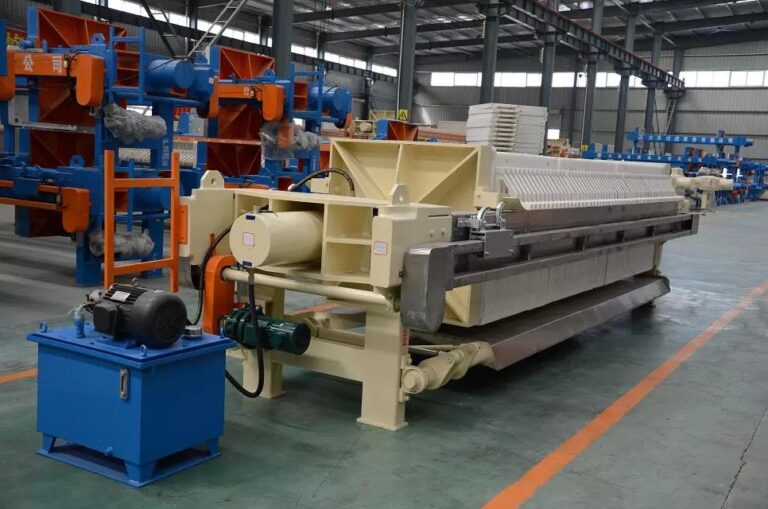
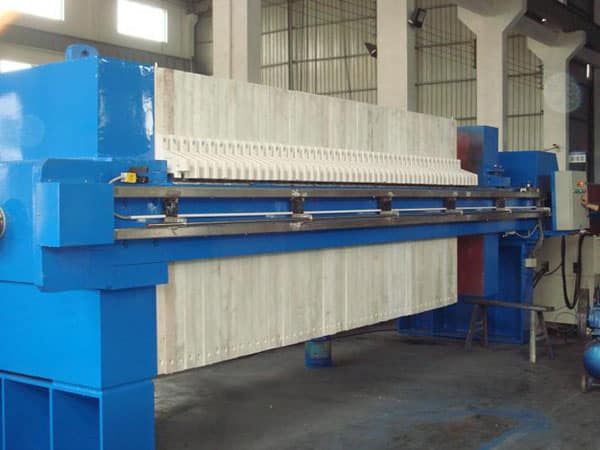
Eine wichtige Entscheidung bei der Spezifikation ist der Plattentyp. Polypropylen-Membranplatten mit Stahlkern bieten einen deutlichen Vorteil. Nach Untersuchungen im Rahmen von Leistungsvergleichen können diese Platten höheren Pressdrücken standhalten (oft bis zu 16 bar gegenüber 10-12 bar bei Standardplatten). Diese strukturelle Integrität ermöglicht eine Vergrößerung des Kammervolumens und der Filtrationsfläche um 10-15% bei gleichem Platzbedarf im Vergleich zu Standard-Polypropylenplatten. Dies bedeutet einen höheren Durchsatz oder die Möglichkeit, einen trockeneren Kuchen zu erzielen, ohne die Presse zu vergrößern, wodurch sowohl der Platzbedarf als auch die Kapitaleffizienz optimiert werden. Für Betriebe, die eine maximale Entwässerungsleistung anstreben, ist die Spezifikation von Hochdruck-Membranplatten ist ein entscheidender Faktor.
Standardisierte Abmessungen für eine zuverlässige Skalierung
Die Verwendung von standardisierten Plattengrößen, wie sie in den Gerätenormen definiert sind, gewährleistet die Vorhersagbarkeit der Skalierungsberechnungen. Die Filtrationsfläche pro Kammer ist ein fester Parameter, der auf den Plattenabmessungen und der Vertiefungstiefe basiert.
| Plattengröße (mm) | Filtrationsfläche pro Kammer | Schlüsselschild Typ Vorteil |
|---|---|---|
| 1500 x 1500 | ~7.5 m² | Standard-Polypropylen |
| 2000 x 2000 | ~13.5 m² | Standard-Polypropylen |
| 2500 x 2500 | ~21 m² | Standard-Polypropylen |
| Stahlkern-Membran | +10-15% Fläche/Volumen | Höherer Quetschdruck |
Quelle: GB/T 35052-2018 Filterpresse für den Bergbau. Diese bergbauspezifische Norm regelt die technischen Anforderungen und Konstruktionsparameter für Filterpressen, einschließlich der Plattenabmessungen und Leistungserwartungen für Abraumanwendungen.
Wichtige Eingangsparameter: Feststoffgehalt im Zulauf, Kuchenfeuchte und Dichte des Schlamms
Der unverzichtbare Bedarf an genauen Daten
Die Integrität der gesamten Größenbestimmung hängt von drei Schlüsselparametern ab: Feststoffgehalt im Zulauf (A1), Zielkuchenfeuchte (A2) und Gülledichte. Der Feststoffgehalt der Beschickung wirkt sich drastisch auf das zu verarbeitende Schlammvolumen aus. Bei einer festen täglichen Trockentonnage muss bei einem Feststoffgehalt von 20% doppelt so viel Flüssigkeit bewegt werden wie bei einem Feststoffgehalt von 40%. Ein Fehler von nur 5% bei dieser Messung kann zu einer Fehlkalkulation von 20-30% bei der erforderlichen Anlagengröße führen.
Die Betriebskosten von Feuchtigkeitszielen
Die Festlegung der Zielkuchenfeuchte (A2) ist keine theoretische Übung. Sie hat direkte, quantifizierbare Auswirkungen auf die Betriebskosten. Ein unrealistisches Ziel, das auf Herstellerangaben oder idealen Laborbedingungen beruht, garantiert eine unzureichende Leistung im Feld. Die Verschlechterung der Prozesseffizienz - das Nichterreichen der vorgegebenen Feuchtigkeit - erhöht die Entsorgungskosten und kann gegen die Betriebsgenehmigung verstoßen. Dieser Parameter muss auf der Grundlage von Pilottestergebnissen mit standortspezifischen Abfällen festgelegt werden, nicht auf der Grundlage von Erwartungen.
Bewertung der Auswirkungen und Kritikalität von Parametern
Die Kenntnis des relativen Gewichts der einzelnen Eingabeparameter gibt Aufschluss darüber, worauf sich der Test- und Validierungsaufwand konzentrieren sollte.
| Eingabe Parameter | Auswirkungen auf die Größenbestimmung | Kritikalität |
|---|---|---|
| Feststoffe im Futter (A1) | Verdoppelt das Güllevolumen bei 20% gegenüber 40% | Hoch |
| Zielkuchenfeuchte (A2) | Die empfindlichste Variable | Sehr hoch |
| Schlamm Dichte | Konvertiert TPD in m³/Tag | Hoch |
| Tägliche Trockensubstanz | 500-2000 TPD | Feste Anforderung |
Quelle: Technische Dokumentation und Industriespezifikationen.
Einbeziehung von Zykluszeit- und Sicherheitsfaktoren für eine verlässliche Dimensionierung
Vom Tagesvolumen zum Bedarf pro Zyklus
Das tägliche Kuchenvolumen muss über mehrere Pressenzyklen hinweg verarbeitet werden. Ein vollständiger Zyklus umfasst das Füllen, die Filtration, das Auspressen der Membranen, das Abblasen, das Entladen des Kuchens und das Schließen der Platten, was in der Regel 2 bis 4 Stunden dauert. Das erforderliche Kuchenvolumen pro Zyklus wird wie folgt berechnet: Tägliches Kuchenvolumen / Anzahl der Zyklen pro Tag. Eine Unterschätzung der Zykluszeit ist ein häufiger Fehler, der dazu führt, dass eine Presse die tägliche Tonnage nicht erreichen kann, da sie einfach nicht genügend Zyklen absolvieren kann.
Die Klugheit der Gestaltungsspielräume
Die beste technische Praxis verlangt die Einbeziehung eines Sicherheitsfaktors. Eine Marge von 10-20% auf das berechnete Kammervolumen berücksichtigt die Variabilität der Aufschlämmung, mögliche zukünftige Durchsatzsteigerungen und vermeidet den Betrieb der Presse mit einer Kapazität von 100%. Der Betrieb mit einer maximalen Kapazität von 80-90% reduziert den mechanischen Verschleiß, bietet Flexibilität bei Prozessstörungen und verlängert die Lebensdauer von Platten und Membranen. Dieser Ansatz steht im Einklang mit der Lebenszykluskostenmodellierung, die robuste, leicht überdimensionierte Konstruktionen, die kostspielige Ausfallzeiten minimieren, gegenüber billigeren, präzise dimensionierten Systemen bevorzugt, die an ihrer Ausfallgrenze arbeiten.
Berücksichtigung betrieblicher Realitäten bei der Gestaltung
Eine zuverlässige Dimensionierung setzt voraus, dass bei der ursprünglichen Berechnung reale Betriebsbedingungen berücksichtigt werden.
| Faktor | Typischer Wert | Zweck |
|---|---|---|
| Vollständige Zykluszeit | 2-4 Stunden | Definiert tägliche Zyklen |
| Sicherheitsfaktor für das Volumen | 10-20% | Konten für Variabilität |
| Betriebskapazität | 80-90% von max. | Reduziert den Verschleiß, erhöht die Flexibilität |
| Zyklen pro Tag | ~6-12 | Basierend auf einem Zyklus von 2-4 Stunden |
Quelle: AQ 2030-2010 Sicherheitsspezifikation für Anlagen zur Entwässerung von Bergematerial. Diese Sicherheitsnorm schreibt Auslegungsspielräume und Betriebsgrenzen vor, um eine zuverlässige und sichere Leistung der Ausrüstung unter variablen Bedingungen zu gewährleisten, was die Verwendung von Sicherheitsfaktoren direkt unterstützt.
Die entscheidende Rolle von Pilottests bei der Validierung Ihres Designs
Abmilderung des hohen Risikos von Annahmen
Pilotversuche sind bei einem Projekt dieser Größenordnung nicht verhandelbar. Theoretische Berechnungen können weder die tatsächliche Entwässerungsrate noch die optimale Zykluszeit oder die erreichbare Endfeuchte für eine bestimmte Absetzschlämme vorhersagen. Diese Ergebnisse hängen von äußerst variablen Faktoren wie der Partikelgrößenverteilung, dem Tongehalt und der Chemie der Schlämme ab. Pilotversuche validieren alle Eingangsannahmen, verfeinern die Anforderungen an die chemische Konditionierung und legen realistische Leistungsmaßstäbe fest, wodurch das Risiko einer chronischen und kostspieligen Minderleistung direkt gemindert wird.
Aufbau einer Datengrundlage für zukünftige Operationen
Die aus einem Pilotversuch gewonnenen Daten dienen nicht nur der Dimensionierung der Ausrüstung, sondern schaffen auch eine Leistungsgrundlage. Diese Basislinie ist entscheidend für künftige vorausschauende Analysen. Sie hilft bei der Vorhersage langfristiger Trends, wie z. B. der Verschmutzungsrate von Membranen und der erwarteten Lebensdauer von Platten, und ermöglicht einen Wechsel von reaktiver zu proaktiver Wartung. Nach meiner Erfahrung bei der Überwachung von Entwässerungsprojekten erzielt das Betriebsteam, das mit umfassenden Pilotdaten beginnt, durchweg eine schnellere Inbetriebnahme und eine stabilere langfristige Leistung.
Die unvermeidlichen Folgen des Überspringens der Validierung
Die Entscheidung, auf Pilotversuche zu verzichten, ist eine Entscheidung, die ein erhebliches operationelles Risiko beinhaltet.
| Fallstrick | Konsequenz | Milderung |
|---|---|---|
| Überspringen des Pilotversuchs | Chronisch unzureichende Leistung | Obligatorischer Validierungsschritt |
| Nicht überprüfte Labordaten | Falsche Volumenberechnung | Verwenden Sie für den Standort repräsentative Proben |
| Unterschätzung der Zykluszeit | Verpasste tägliche Tonnage | Konservative Zeitschätzungen |
| Sicherheitsfaktor ignorieren | Keine operative Flexibilität | Marge 10-20% anwenden |
Quelle: HG/T 4333.1-2012 Technische Spezifikation für Platten- und Rahmenfilterpressen. Diese technische Spezifikation beschreibt die Anforderungen für die Entwurfsvalidierung und Leistungsprüfung und bietet den Rahmen, um häufige Konstruktions- und Spezifikationsfehler zu vermeiden.
Integration von Zusatzgeräten: Pumpen, Zufuhrsysteme und Steuerungen
Das System jenseits der Presse
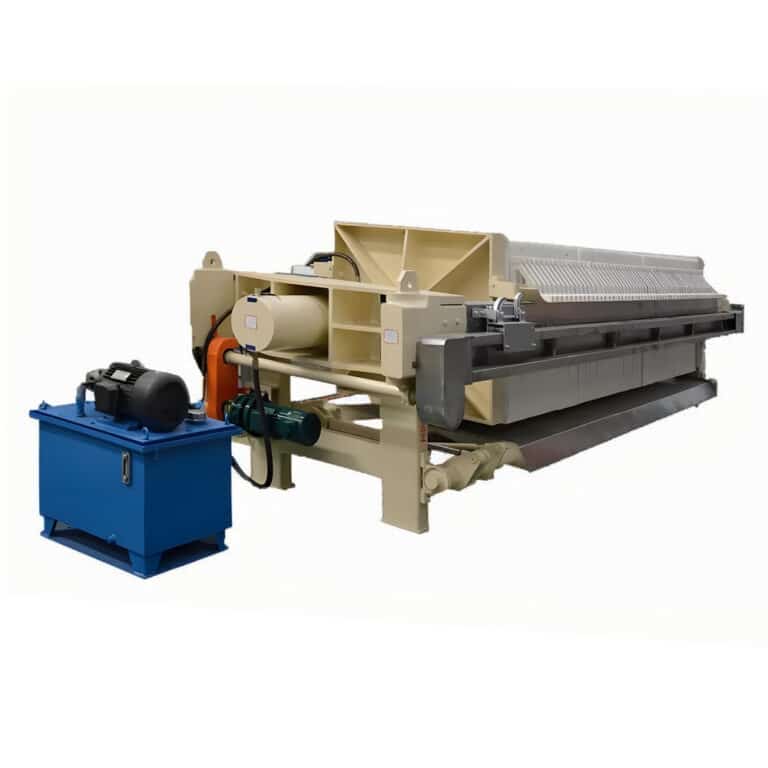
Eine Membranfilterpresse ist das Herzstück eines größeren Entwässerungssystems. Ihre Leistung hängt von der richtig dimensionierten und integrierten Zusatzausrüstung ab. Die Förderpumpe muss das erforderliche Schlammvolumen mit dem hohen Druck liefern, der für die Membranquetschphase benötigt wird, oft bis zu 16 bar. Für die Membranquetschfunktion ist in der Regel ein separates Hochdruck-Wasserpumpenaggregat erforderlich. Das Steuerungssystem muss die gesamte Abfolge - Befüllung, Filtration, Auspressen, Abschlämmung, Plattenverschiebung und Entleerung - mit entsprechenden Sicherheitsverriegelungen automatisieren.
Der Wert einer Partnerschaft für integrierte Lösungen
Der Trend in der Branche geht aus gutem Grund zu integrierten Lösungspartnerschaften. Die Wahl eines Anbieters, der das gesamte System - von den Pumpen und Zuführungstanks bis hin zur Druckmaschine, den Druckplatten und der Steuerung - liefert und entwickelt, verringert das Projektrisiko erheblich. So wird sichergestellt, dass die Verantwortung in einer Hand liegt und dass alle Komponenten richtig dimensioniert und kompatibel sind. Dieser integrierte Ansatz minimiert Schnittstellenprobleme bei der Inbetriebnahme und senkt letztlich die Gesamtkosten über den Lebenszyklus durch Optimierung der systemweiten Effizienz und Zuverlässigkeit.
Häufige Fallstricke bei der Größenbestimmung und wie man sie vermeidet
Der teuerste Fehler: Überspringen der empirischen Validierung
Der größte und kostspieligste Fehler ist die Umgehung von Pilottests. Dadurch ist eine Diskrepanz zwischen der erwarteten und der tatsächlichen Leistung fast garantiert, wie in der Falltabelle hervorgehoben wird. Ein weiteres kritisches Versäumnis ist das Ignorieren der formalen, überprüfbaren Leistungsdefinitionen, die in den Vorschriften vorgeschrieben sind. So müssen die Spezifikationen beispielsweise einen messbaren, überprüfbaren Standard für die Kuchenfeuchte und die Feststoffabscheidung garantieren und dürfen sich nicht nur auf die Angaben des Herstellers verlassen. Das System muss so konzipiert sein, dass eine direkte Integritätsprüfung seiner Leistung möglich ist.
Navigieren durch Spezifikations- und Datenfallen
Weitere häufige Fehler sind die Verwendung von Feststoffdaten aus einer einzigen, nicht repräsentativen Probe und die Anwendung zu optimistischer Zykluszeiten ohne Berücksichtigung von Plattenverschiebungen und Reinigungszeiten. Ein strenger Spezifikationsprozess, der sich an einschlägigen Normen wie JB/T 4333.2-2019 Platten- und Rahmenfilterpresse, bietet den Rahmen, um diese Fehler zu vermeiden. Diese Norm definiert die grundlegenden Parameter und Berechnungsgrundlagen für die Auslegung von Filterpressen und schafft eine gemeinsame technische Sprache zwischen Käufer und Lieferant.
Quantifizierung der Kernberechnungsvariablen
Ein klares Verständnis der Berechnungsbausteine ist der erste Schutz gegen Fehler bei der Dimensionierung.
| Parameter | Symbol | Typischer Bereich / Beispiel |
|---|---|---|
| Tägliches Güllevolumen | V1 | 500-2000 m³/Tag |
| Feststoffgehalt im Futter | A1 | 20-40% (dezimal) |
| Zielkuchenfeuchte | A2 | 15-25% (dezimal) |
| Erforderliches Kuchenvolumen | V | Berechnet (m³/Tag) |
| Sicherheitsfaktor | - | 10-20% hinzugefügt zu V |
Quelle: JB/T 4333.2-2019 Platten- und Rahmenfilterpresse. Diese Norm legt die grundlegenden Parameter und Berechnungsgrundlagen für die Auslegung von Filterpressen fest, einschließlich der Beziehung zwischen den Eigenschaften der Beschickung und dem erforderlichen Kammervolumen.
Entwicklung einer Spezifikation und eines Implementierungsfahrplans
Ein strukturierter Arbeitsablauf für die Spezifikation
Eine solide Gerätespezifikation ergibt sich aus einem disziplinierten, sequenziellen Arbeitsablauf: 1) Charakterisierung des Schlamms durch Tests, 2) Festlegung realistischer Feuchtigkeits- und Durchsatzziele, 3) Berechnung des Kernvolumens, 4) Abschätzung der Zykluszeit durch Pilotversuche, 5) Auswahl der Plattengröße und des Plattentyps, 6) Berechnung der Plattenanzahl mit einer Sicherheitsspanne und 7) Bestimmung der gesamten Filtrationsfläche und des Bedarfs an Hilfsgeräten. Dieser Arbeitsablauf verwandelt eine Prozessanforderung in ein präzises technisches Dokument.
Zukunftssichere Investition in die Entwässerung
Der Fahrplan muss über den unmittelbaren Bedarf hinausgehen. Berücksichtigen Sie die Abwasserqualität im Hinblick auf eine mögliche Wiederverwendung des Wassers und machen Sie aus einer Compliance-Anforderung eine Ressourcennutzung. Darüber hinaus erfordert ein professionelles Management, dass von Anfang an wichtige Leistungsindikatoren (KPIs) festgelegt werden - konstante Kuchenfeuchte, Zykluszeit und Plattenlebensdauer. Nutzen Sie langfristige Betriebsdaten nicht nur für reaktive Compliance-Berichte, sondern auch für eine vorausschauende Wartung und kontinuierliche Prozessoptimierung.
Die genaue Dimensionierung einer Membranfilterpresse ist ein durchdachter technischer Prozess, bei dem Berechnung und Validierung im Gleichgewicht stehen. Die Prioritäten sind klar: Sicherstellung repräsentativer Zuführungsdaten, Durchführung von Pilotversuchen, Einbeziehung umsichtiger Sicherheitsmargen und Festlegung auf überprüfbare Leistung. Diese Methodik verringert das Investitionsrisiko und schafft die Grundlage für einen effizienten, vorschriftsmäßigen Betrieb. Benötigen Sie professionelle Unterstützung bei der Spezifizierung und Implementierung eines auf die spezifische Geologie und den Durchsatz Ihres Standorts zugeschnittenen Entwässerungssystems für Abraum? Das Ingenieurteam von PORVOO kann Sie von der Charakterisierung der Gülle bis zur Inbetriebnahme begleiten. Kontakt um Ihre Projektparameter zu besprechen.
Häufig gestellte Fragen
F: Wie lautet die Kernformel für die Dimensionierung einer Filterpresse auf der Grundlage der täglichen Feststofftonnage?
A: Die grundlegende Berechnung bestimmt das erforderliche Kuchenvolumen (V) anhand der Formel V = V1 * A1 / (1 - A2). Dabei ist V1 das tägliche Güllevolumen, A1 der Feststoffgehalt des Futters und A2 die Zielkuchenfeuchte. Diese Gleichung quantifiziert den direkten Kompromiss zwischen dem Erreichen eines niedrigeren Feuchtigkeitsziels und dem daraus resultierenden Anstieg der erforderlichen Anlagengröße. Das bedeutet, dass Anlagen, die einen aggressiven Trockengehalt anstreben, ein deutlich größeres Kammervolumen und höhere Investitionskosten einplanen müssen.
F: Wie lässt sich das erforderliche Kammervolumen in eine bestimmte Anzahl von Platten und eine bestimmte Filtrationsfläche umrechnen?
A: Sie dividieren das benötigte Gesamtkuchenvolumen durch das Kammervolumen einer ausgewählten Standardplattengröße, z. B. 1500 mm oder 2000 mm, um die Anzahl der benötigten Platten zu bestimmen. Die Gesamtfiltrationsfläche ergibt sich dann aus der Anzahl der Kammern multipliziert mit der Fläche pro Kammer. Für einen entscheidenden Spezifikationsvorteil sollten Sie Polypropylen-Membranplatten mit Stahlkern in Betracht ziehen, die das effektive Volumen und die Fläche bei gleicher Rahmengröße um 10-15% erhöhen können. Bei Projekten mit begrenztem Platzangebot optimiert diese Plattentechnologie die Kapitaleffizienz, indem sie einen größeren Durchsatz ohne größere Stellfläche ermöglicht.
F: Warum sind Pilotversuche für die Dimensionierung von Filterpressen in Abraumanwendungen nicht verhandelbar?
A: Pilotversuche sind unerlässlich, da theoretische Berechnungen die Entwässerungsrate, die optimale Zykluszeit oder die erreichbare Endfeuchte für Ihren spezifischen Schlamm nicht genau vorhersagen können, da diese von der Partikelgröße und der Chemie abhängen. Sie validieren alle Eingangsannahmen und verfeinern die Anforderungen an die chemische Konditionierung, um eine zuverlässige Leistungsgrundlage zu schaffen. Wenn Ihr Betrieb einen garantierten Durchsatz oder eine garantierte Kuchentrockenheit erfordert, sollten Sie einen Pilotversuch einplanen, um das hohe Risiko einer chronisch unzureichenden Leistung zu mindern und um Daten für künftige Modelle zur vorausschauenden Wartung zu sammeln.
F: Welche häufigen Fehler bei der Dimensionierung führen zu einer unzureichenden Leistung der Filterpresse?
A: Der kritischste Fehler ist das Auslassen von Pilotversuchen, gefolgt von einer Unterschätzung der Zykluszeit und der Verwendung ungeprüfter Labordaten für wichtige Inputs wie den Feststoffgehalt des Futters. Die Nichtberücksichtigung eines Sicherheitsfaktors von 10-20% für das berechnete Volumen ist ein weiterer häufiger Fehler, da er keinen Puffer für Schwankungen im Einsatzmaterial oder zukünftige Durchsatzsteigerungen bietet. Das bedeutet, dass Betriebe, die eine zuverlässige, langfristige Entwässerung anstreben, robusten, leicht überdimensionierten Konstruktionen, die die Lebenszykluskosten minimieren, den Vorzug vor billigeren, präzise dimensionierten Systemen geben sollten, die an ihrer Ausfallgrenze arbeiten.
F: Wie beeinflussen Industrienormen wie GB/T 35052-2018 die Spezifikationen von Filterpressen für den Bergbau?
A: Normen wie GB/T 35052-2018 legen verbindliche technische Anforderungen, Prüfverfahren und Inspektionsvorschriften für Filterpressen im Bergbau fest und bieten einen formalen Rahmen für die Leistung. Durch die Einhaltung dieser Normen wird sichergestellt, dass die Konstruktion der Ausrüstung den vorgeschriebenen Sicherheits- und Leistungsstandards entspricht, was für die Einhaltung der Vorschriften entscheidend ist. Bei Projekten im regulierten Bergbau muss Ihre Spezifikation auf diese Normen Bezug nehmen, um einen überprüfbaren, testbaren Leistungsstandard zu gewährleisten, der über die Behauptungen des Herstellers hinausgeht.
F: Welche Hilfssysteme sind für eine voll funktionsfähige Filterpressen-Entwässerungsanlage entscheidend?
A: Ein komplettes System erfordert eine Hochdruckförderpumpe, ein separates Membranquetschpumpengestell und eine automatische Steuerung mit Sicherheitsverriegelungen. Diese Komponenten müssen richtig dimensioniert und integriert sein, um Drücke von bis zu 16 bar während der Squeeze-Phase zu bewältigen. Dies bedeutet, dass Sie einen Anbieter auswählen müssen, der das gesamte integrierte System entwickelt, von Platten- und Rahmenfilterpresse Komponenten für Pumpen, reduziert das Projektrisiko durch eine einzige Verantwortlichkeit und senkt die langfristigen Lebenszykluskosten.
F: Wie sollten die Sicherheitsvorschriften in die Planung eines Abraumentsorgungssystems einfließen?
A: Sicherheitsstandards wie AQ 2030-2010 spezifische Anforderungen für die Konstruktion, Installation und Wartung von Anlagen zur Entwässerung von Bergematerial festlegen. Die Einhaltung dieser Vorschriften ist nicht optional und beeinflusst die Systemauslegung, die Betriebsverfahren und die Inspektionsprotokolle. Wenn Ihr Betrieb diesen Vorschriften unterliegt, sollten Sie diese Sicherheitsspezifikationen bereits in der ersten Entwurfsphase berücksichtigen, um kostspielige Nachrüstungen zu vermeiden und einen sicheren, vorschriftsmäßigen Betrieb zu gewährleisten.